The startup operates a deep tech lab that utilizes high-pressure, high-temperature (HPHT) methods to synthesize diamonds that are chemically and physically identical to natural diamonds. By providing sustainable diamond alternatives, the company offers clients a convenient solution to the ethical and environmental concerns associated with traditional diamond mining.
Find Investable Startups and Competitors
Search thousands of startups using natural language—just describe what you're looking for
Nonmetallic Mineral Product Manufacturing Startups in Netherlands
50 companies matched by StartupSeeker’s semantic search. Average reported funding: $24.3M.
Snapshot from
SusPhos utilizes proprietary technology to convert phosphate-rich sewage sludge ash into commercially viable products for the fertilizer and cement industries, effectively closing the phosphate cycle. This process addresses the challenges of waste management and sustainability by minimizing CO2 emissions and eliminating waste generation.
Green Carbon utilizes natural minerals to chemically bind with greenhouse gases such as CO2, ammonia, and radon, effectively reducing their concentration in the atmosphere. This technology not only lowers CO2 levels to cleaner than outside air but also enables energy savings by improving air quality in built environments.
This startup operates a plastics recycling facility that transforms polyethylene waste through processes such as sorting, washing, and extrusion. By converting plastic waste into sustainable materials, the company helps reduce environmental pollution and lower CO2 emissions associated with traditional plastic production.
Paques Biomaterials develops a biodegradable biopolymer, Caleyda®, using microbial fermentation of organic residual streams without genetic modification or fossil resources. This technology provides a natural alternative to conventional plastics, effectively eliminating harmful microplastics and supporting a circular economy.
Nature's Principles utilizes a patented fermentation platform to convert diverse residual feedstocks into bio-based lactic acid, a versatile chemical used in bioplastics and food preservation. The company addresses the challenge of waste management by transforming side streams into valuable products, promoting a circular economy in chemical production.
IonIQs B.V. specializes in lithium purification technologies that utilize advanced separation processes to recover lithium from brine and mineral sources. The company addresses the inefficiencies in traditional lithium extraction methods, promoting sustainable practices that support the energy transition and circular economy.
This company produces sustainable oils and fats through biomass fermentation, upcycling undervalued food industry side streams using non-GMO yeast. Their process offers a scalable, low-carbon alternative to traditional palm oil for food and beauty product formulations. The resulting microbial oils provide high-performing functional ingredients with significantly reduced land use and emissions.
The Protein Brewery utilizes fermentation technology to produce Fermotein®, a plant-based protein ingredient that is rich in essential amino acids, vitamins, and minerals. This addresses the need for sustainable, nutritious food sources in the food industry, enabling manufacturers to create healthier products without compromising on taste.
Solarge manufactures lightweight, fully recyclable solar panels using advanced polymer technology, which significantly reduces CO2 emissions during production and eliminates harmful PFAS chemicals. Their solution addresses the need for sustainable energy sources by providing a circular product that enhances the efficiency of solar energy generation while minimizing environmental impact.
SolvGE produces a Hydrogen Peroxide Concentrator that enhances the efficiency of hydrogen peroxide production for various industrial applications. This technology addresses the need for a more sustainable and cost-effective solution in chemical manufacturing processes.

LionVolt is developing a 3D structured lithium-metal anode technology that enhances energy density and charging speed for lithium-ion and sodium-ion batteries. This architecture improves cycle life and safety while enabling scalable, low-cost manufacturing, addressing the limitations of current battery performance.
Healix Clean Tech utilizes advanced purification technology to transform plastic waste from the fishing and farming industries into certified circular plastics for the manufacturing supply chain. This process addresses the critical issue of plastic pollution by keeping plastic out of the environment and reducing reliance on virgin materials.
Farmless produces sustainable proteins by utilizing microbial fermentation powered by renewable energy. This process creates food ingredients independent of traditional agricultural land use. The company aims to offer planet-friendly protein alternatives while supporting environmental restoration.
The startup develops a machine for high-volume spatial atomic layer deposition using super spatial precursor separation technology, which significantly enhances throughput and uptime. This technology enables manufacturers to efficiently integrate atomic layer deposition into their production processes, reducing costs and increasing scalability.
EV Biotech develops microbial cell factories that utilize synthetic biology techniques for the industrial production of chemicals and proteins. This approach addresses the need for sustainable and efficient manufacturing processes in the chemical and biotechnology sectors.
The startup develops machine-learning tools to design cell factories capable of producing a wide range of products, including food, fabrics, and medicines. By simplifying the complex process of cellular manufacturing, the company aims to replace traditional farms and factories, promoting a more sustainable production model.
RESONIKS provides AI-powered acoustic testing for fast, automated detection of internal structural defects in manufactured components. This inline quality control solution offers 100% real-time inspection, eliminating the need for slow, costly legacy methods like X-ray or ultrasound. The system enables manufacturers to find defects early in the production process, reducing scrap and improving overall product integrity.
beSirius provides an AI‑driven knowledge graph that consolidates all audits, certifications, KYC, and risk data for critical mineral supply chains into a single, queryable source. The platform automates compliance workflows, delivering gap analysis and supplier assessments up to 100 times faster and at a fraction of the cost of traditional consulting. By supporting over 0+ global frameworks, it enables sustainability, procurement, and finance teams to meet regulatory and buyer requirements with consistent, auditable data.
Veridis offers MADSCAN®, an industrial-scale thermal analysis technology that provides over 99% accurate insights into the composition of complex plastic streams, facilitating effective quality control and recycling processes. By enabling precise fraction and weight ratio measurements, MADSCAN® increases the value of recyclates by over 25% and optimizes both incoming and outgoing recycling feedstock.
The startup develops a climate technology that converts organic waste streams into high-quality raw materials while capturing and utilizing atmospheric CO2. This process reduces greenhouse gas emissions and fossil raw material dependency, enabling companies to lower their carbon footprint and mitigate environmental impact.
Additive Industries delivers automated, large-frame metal additive manufacturing systems for industrial-scale production. Their MetalFABG2 platform offers configurable cells and advanced laser technology to efficiently produce complex metal parts with enhanced precision and repeatability.
EZ Factory develops mobile applications that digitize checklists, audits, and work instructions to enhance safety and operational efficiency in manufacturing facilities. By empowering operators with user-friendly tools, the platform reduces downtime and improves product quality, leading to measurable cost savings within months.
MX3D specializes in large-scale robotic 3D metal printing using Wire Arc Additive Manufacturing (WAAM) technology, enabling the production of qualified metal parts weighing up to 10,000 kg. The company provides efficient, in-house manufacturing solutions for medium-to-large metal components, addressing the need for high-quality, cost-effective production in various industries.
Manuevo utilizes advanced 3D printing technologies to manufacture production-grade items on demand, enabling the creation of complex geometries in a single build. This approach significantly reduces assembly time and accelerates product development cycles, providing reliable quality across a wide range of materials.
The startup manufactures silicon nitride photonic chips for optical communication applications, utilizing wafer-scale manufacturing and light propagation techniques to handle wavelengths from visible to near-infrared. This technology enables industries to achieve high-performance data transmission with minimal loss, addressing the need for efficient communication solutions in a data-driven world.
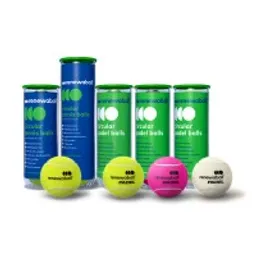
This startup manufactures circular tennis and padel balls by collecting, shredding, and separating used balls, directly addressing the environmental impact of traditional ball production. Their sustainable products contribute to the achievement of Sustainable Development Goals 12, 13, and 14, offering customers an eco-friendly alternative that reduces waste and pollution.
Smyle produces eco-friendly toothpaste tablets and a sonic electric toothbrush designed to eliminate plastic tubes and microplastics from oral care routines. Their products utilize hydroxyapatite for remineralization, effectively preventing cavities and plaque while significantly reducing plastic waste in dental hygiene.
SparkNano utilizes Spatial Atomic Layer Deposition (ALD) technology to enable the mass production of energy and display devices with significantly reduced reliance on scarce materials. This approach enhances performance and efficiency in applications such as hydrogen production, batteries, and solar cells, addressing the critical need for sustainable manufacturing solutions.
VSParticle develops nanoparticle generators using spark ablation technology, enabling rapid synthesis and deposition of advanced materials for applications in sensors, batteries, and catalysis. Their solution addresses the reproducibility challenges in energy materials, significantly reducing preparation time from weeks to hours, thereby accelerating material innovation for sustainable development.
The startup produces crude lignin oil and crude sugar oil from agricultural and forestry residues, providing a bio-based alternative to fossil fuels for the petrochemical industry. This sustainable raw material can replace fossil crude oil in the production of materials, chemicals, and fuels, offering a renewable source for companies seeking to reduce their carbon footprint.
The startup develops bio-refinery technology that extracts essential oils, pulp, cellulose, and pectin from citrus peel waste, transforming it into valuable raw materials. This process addresses the issue of citrus peel waste by providing businesses with sustainable, recycled ingredients for various applications.
Outlander Materials utilizes biotechnology to convert food waste, particularly from breweries, into compostable materials like UnPlastic, which serve as non-toxic alternatives to single-use plastics. This process addresses the issue of plastic pollution by creating biodegradable products that do not break down into harmful microplastics, thereby promoting a circular economy.
FUL Foods produces a natural blue color extract, FUL® BLU, derived from spirulina phycocyanin for the food, beverage, and cosmetic industries. This patented extract offers superior heat and pH stability, making it a versatile, tasteless alternative to synthetic colorants. Beyond coloring, the ingredient provides functional benefits linked to antioxidant properties while utilizing a sustainable production process that captures CO2.
PHOTANOL utilizes cyanobacteria to convert CO₂ into renewable chemicals, enabling the production of sustainable materials for various applications, including plastics and biofuels. This approach addresses the reliance on fossil resources by creating a circular economy in the chemical industry.
Chromodynamics develops multispectral cameras capable of capturing real-time images detailing material composition. These cameras overcome traditional limitations by simultaneously delivering high resolution, speed, and a broad range of spectral bands. This technology supports advancements across life science research, diagnostics, and efficient manufacturing processes.
CEAD specializes in large format thermoplastic composite 3D printing, utilizing modular robot-based systems to produce high-strength, lightweight components for various industries. Their technology reduces production time and labor costs while enabling the creation of complex geometries that traditional manufacturing methods cannot achieve.
UBITE provides bio‑based polymer materials that match the performance of traditional plastics while being fully reusable and recyclable. Its platform enables hospitality, travel, and consumer brands to customize premium tableware and packaging with heat‑resistant, porcelain‑like finishes, supported by a closed‑loop take‑back system.
Arceon engineers and manufactures proprietary carbon-ceramic composite materials designed for high-performance applications in extreme environments exceeding 1500 °C. These materials offer superior thermal resistance, damage tolerance, and lower density compared to traditional superalloys and carbon-carbon. The company provides near-net-shape components like propulsion nozzles and heat shields for the aerospace, defense, and industrial sectors.
Greencovery provides technology and expertise to extract high-quality, functional ingredients from food production side streams. They validate technical feasibility, market demand, and commercial viability for ingredient upcycling projects. This service accelerates the time-to-market for recovered compounds, enhancing profitability and sustainability for food producers.
The startup develops bio-based aromatics by converting biomass residues into chemical ingredients that serve as essential raw materials for coatings, adhesives, and insulating foam. This process provides a sustainable alternative to fossil-derived aromatics, enhancing product performance while reducing reliance on non-renewable resources.
Foamlab manufactures fully compostable nanocellulose foams using a microbial fermentation platform that produces bacterial nanocellulose with tunable density, rigidity, and porosity. The resulting foams deliver mechanical strength, thermal and acoustic insulation comparable to conventional polymer foams while being biodegradable under industrial composting, enabling manufacturers in packaging, building insulation, automotive, aerospace, and consumer goods to replace petro‑based foams with a sustainable, performance‑matched material.
Nile Recycling processes post-consumer PET plastic into high-quality recycled PET (rPET) pellets. Their advanced sorting and proprietary recycling methods ensure material purity and consistency, enabling manufacturers to integrate sustainable rPET into their production lines. This provides a reliable supply of rPET for eco-friendly product development and the circular economy.
The startup manufactures recycled construction materials by utilizing physical separation technologies and a new heated air separation method to convert end-of-life concrete into clean aggregates and cement. This process provides clients with low-cost, eco-friendly concrete, addressing the need for sustainable building materials in the construction industry.
Lithium Werks manufactures lithium-ion battery cells and custom battery packs for energy storage, transportation, marine, and industrial markets. They specialize in providing inherently safe and reliable battery systems using patented technology. Their product offerings include various cell formats and integrated battery solutions.
The Good Roll produces 100% sustainable toilet paper made from bamboo and recycled paper, eliminating the need for tree harvesting and harmful chemicals. The company addresses the lack of access to clean sanitation facilities by donating 50% of its profits to build toilets in Ghana, improving hygiene and health for underserved communities.
The company produces algae‑derived nutritional supplements that combine over 75 vitamins, minerals, essential amino acids, antioxidants and fiber in a single vegan capsule or powder. The algae are cultivated in closed‑system bioreactors using minimal water, no land or pesticides, achieving a high CO₂ fixation rate and a low‑carbon footprint. Products are sold to consumers and retailers through one‑time purchases or a subscription model, packaged in recyclable, sustainable materials.
This company provides Direct Carbon Immobilization (DCI™) technology to convert waste and biomass into valuable products. The process yields syngas, which can replace fossil-based feedstock, and sequestered carbon. This technology offers a solution for waste management while reducing carbon dioxide emissions and enabling mineral recovery from solids.
The startup develops a ceramic fiber technology that utilizes nano-fiber composites to create flexible, non-brittle materials with temperature stability and electrical insulation properties. This technology enhances performance in applications such as microfiltration, catalyst support, and heat dissipation for electronics, enabling the design of novel products.
VanHier transforms agricultural residues and fiber‑crop by‑products into FytoPanel, a 100 % biobased board that matches the strength and stability of conventional MDF. The water‑based fiber matting and hot‑press process eliminates synthetic resins, reducing CO₂ emissions by up to 70 % and delivering a formaldehyde‑free product certified for indoor air quality. Panels are offered in multiple thicknesses and densities, can be recycled or composted at end‑of‑life, and serve architects, builders, and furniture makers seeking sustainable material solutions.