Hiber provides a remote monitoring system, HiberHilo, that integrates temperature and pressure sensors with IoT connectivity to deliver real-time data for oil and gas well management. This solution enables operators to monitor well integrity and optimize production from any location, significantly reducing the need for on-site inspections.
Find Investable Startups and Competitors
Search thousands of startups using natural language—just describe what you're looking for
Oil And Gas Extraction Startups in Netherlands
39 companies matched by StartupSeeker’s semantic search. Average reported funding: $5.1M.
Snapshot from
Orbio is a data fusion platform that utilizes satellite imagery to provide real-time methane emissions tracking for oil and gas infrastructure, enabling operators to identify super-emitter durations and prioritize reduction opportunities. The platform addresses the challenge of underreported methane emissions, which can be as high as 70%, by delivering precise, asset-level insights that help companies comply with emerging regulations and mitigate financial risks.
AvidBeam utilizes AI-driven video analytics and big data tools to extract real-time business intelligence from extensive video content, enabling efficient processing of thousands of video streams. This technology addresses the challenge of deriving actionable insights from video data across various sectors, including security, transportation, and smart cities.
Otter Intelligence provides an AI‑driven software platform that ingests real‑time sensor data from industrial wastewater treatment plants and automatically calculates optimal reagent dosing setpoints. The system integrates with existing SCADA or PLC controls to adjust pumps in a closed loop, delivering chemical savings, energy reductions, and continuous regulatory compliance reporting.
Green Gas and Liquids offers integrated solutions for CO2 capture and biogas upgrading, enabling industries to decarbonize and monetize their waste streams. Their Galloxol® technology efficiently captures CO2 using an accelerated salt process, while Hybrisol® upgrades biogas to biomethane and pure bio-CO2.
Chapter provides AI-powered workflow automation specifically for Energy Sector OEMs using specialized AI chatbots and agents. This platform integrates disparate data sources to automate repetitive tasks like serial number lookups and firmware checks across existing systems. The result is faster operational workflows, reduced support tickets, and increased team focus through task execution capabilities.
Samotics provides a predictive maintenance system for submerged pumps using Electrical Signature Analysis to monitor motor performance and detect early signs of mechanical issues and blockages. This technology enables water utilities to prevent costly sewage overflows and reduce emergency repair expenses by delivering real-time insights and predictive alerts for timely maintenance.
Scura provides on-demand aerial swarm systems for persistent unmanned remote deployments, utilizing a network of robotic stations to store and service up to 32 drones per station. This technology enables real-time inspections, asset management, and emergency response across various sectors, ensuring continuous operational capability within a 45 km radius.
The startup develops advanced filtration systems that remove sulfur and carbon emissions from ship exhaust, enabling operators to use high-sulfur fuel while achieving compliance with environmental regulations. Their technology not only reduces harmful emissions but also provides significant cost savings by eliminating the need for more expensive low-sulfur fuel.
Skoon provides a marketplace for renting clean energy systems, including batteries, solar panels, and hydrogen fuel cells, tailored to the needs of various industries such as construction and film production. The company addresses the reliance on diesel generators by offering zero-emission power solutions that enable real-time monitoring and reporting of energy usage and emissions.
This company produces sustainable oils and fats through biomass fermentation, upcycling undervalued food industry side streams using non-GMO yeast. Their process offers a scalable, low-carbon alternative to traditional palm oil for food and beauty product formulations. The resulting microbial oils provide high-performing functional ingredients with significantly reduced land use and emissions.
Provides AI-driven power forecasting and short-term trade optimization solutions for renewable energy companies, processing 1TB of weather and market data daily to generate accurate forecasts and trade signals. Reduces balancing costs by up to 35% and maximizes trade profits through an integrated platform that combines generation forecasting, price forecasting, and smart bidding strategies.
The startup produces crude lignin oil and crude sugar oil from agricultural and forestry residues, providing a bio-based alternative to fossil fuels for the petrochemical industry. This sustainable raw material can replace fossil crude oil in the production of materials, chemicals, and fuels, offering a renewable source for companies seeking to reduce their carbon footprint.
Skytree offers modular Direct Air Capture (DAC) technology to extract CO₂ from the atmosphere. Their scalable systems enable the production of carbon-neutral eFuels and support agricultural applications by providing a source of atmospheric carbon.
Terrawaste utilizes proprietary hydrothermal liquefaction technology to convert diverse waste streams, including mixed plastics and organic matter, into valuable bio-crude oil, biochar, and chemicals. This process offers a sustainable solution for waste valorization, enabling businesses to reduce landfill waste and create new revenue streams from byproducts.
PHOTANOL utilizes cyanobacteria to convert CO₂ into renewable chemicals, enabling the production of sustainable materials for various applications, including plastics and biofuels. This approach addresses the reliance on fossil resources by creating a circular economy in the chemical industry.
SeaO2 utilizes electrochemical Direct Ocean Capture (DOC) powered by renewable electricity to extract dissolved CO₂ from seawater. This process facilitates Carbon Dioxide Removal (CDR) through permanent geological sequestration or mineralization into products like concrete. The extracted CO₂ is also offered as a valuable resource for industrial utilization, supporting decarbonization efforts.
The startup has developed a silent installation technology for offshore wind turbine foundations that minimizes noise pollution and disruption to marine ecosystems during deployment. This method enables energy companies to enhance sustainability efforts while facilitating the transition to renewable energy sources in offshore environments.
Hydryx automates landfill gas management by deploying sensors and actuators on existing gas extraction infrastructure, optimizing valve positions through a cloud-based algorithm to minimize methane leaks and enhance biogas recovery. This technology addresses the inefficiency of current landfill gas collection methods, where approximately 60% of methane escapes, by providing real-time monitoring and control to improve energy generation efficiency.
Roam AI provides an AI‑driven platform that continuously analyzes real‑time well data and applies physics‑based models to optimize artificial lift operations, including ESP pressure regulation and chemical injection. The system offers semi‑autonomous and fully autonomous control loops, predictive failure analytics, and a cloud‑native data hub that consolidates streaming and historical data for actionable dashboards, helping operators increase uplift and extend pump life while reducing maintenance and chemical costs.
The startup develops photonics and IoT sensing technology for continuous, non-intrusive monitoring in process industries. This technology enables the early detection of corrosion under insulation, leaks, and energy spillage, enhancing operational efficiency and reducing maintenance costs.
Solho develops the SPRHOUT (Solar PoweRed Heating & cooling UniT), a solar thermal system that converts solar energy into heating and cooling for industrial and residential applications. This technology reduces reliance on fossil fuels, lowers greenhouse gas emissions, and offers a return on investment in under three years through significant cost savings and government incentives.
EnginX provides a data-driven design tool, Orion, that streamlines the engineering process for complex fluid-control systems by integrating real-time data and automating calculations. This reduces time-to-market and minimizes human error, enabling engineers to focus on creating efficient and sustainable designs.
Verdant Biogas offers smallholder farmers bio-digester systems that convert organic waste into biogas for cooking and nutrient-rich fertilizer for soil. This integrated solution reduces reliance on expensive imported fuels and chemical fertilizers, improving crop yields and providing clean energy.
VesselData provides an AI‑powered compliance assistant that answers maritime greenhouse‑gas regulation queries in natural language, using vessel specifications, AIS data, and emissions metrics to generate ship‑specific reporting guidance. The platform continuously aggregates EU and IMO rule changes and delivers actionable insights via a web dashboard and API, reducing reliance on external consultants and streamlining compliance for ship owners and operators.
This company provides software for electric vehicle charging point operators (CPOs), offering a self-service platform with essential connectivity features. Their software helps CPOs manage and scale their charging infrastructure efficiently and cost-effectively.
The startup develops heavy-lift inline Active Heave Compensation (AHC) tools for offshore operations, utilizing balanced heave compensation systems to enhance feeder barge operations. Its proportional luffing systems extend the safe landing time during emergencies, reducing energy waste and lowering hardware costs and overall system weight.
This startup converts sustainable biomass into biogas, which is then processed to produce green hydrogen and CO2 for the chemical industry and transportation fuels. By providing renewable energy sources, the company addresses the reliance on fossil fuels and contributes to reducing carbon emissions in the Netherlands.
This startup offers a platform for real-time collection and monitoring of greenhouse gas and energy data from IoT sensors. The platform provides actionable insights for sustainable finance and carbon industries, enabling better soil health and energy efficiency.
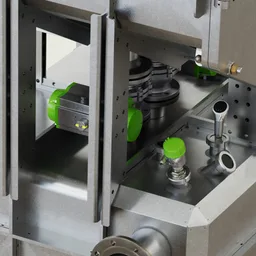
Ter Bron develops proprietary hydraulic workover technology, embodied in its compact “Mantis” unit, to perform remote well interventions such as tubing pulling, annulus remediation, and casing extraction. The system targets decommissioning, geothermal repurposing, CO₂ injection, and energy‑storage projects, offering reduced crew size, lower environmental impact, and faster rig‑up compared with traditional rigs. Revenue is generated through turnkey project contracts and equipment leasing, with additional services for planning, logistics, and on‑site execution.
The startup specializes in biogas technology that converts biomass into energy pellets, enhancing energy production efficiency for biogas plants. By optimizing input streams, the company enables clients to increase their biogas yield and improve overall energy output.
Biodentify utilizes soil sampling and bacterial DNA analysis combined with machine learning to create predictive maps that identify high-potential drilling sites for oil and gas. This technology significantly reduces drilling risks and costs by accurately delineating productive reservoirs and minimizing the environmental impact of exploration activities.
ReCarbn develops a direct air capture technology that utilizes a circulating solid sorbent mechanism to efficiently extract CO₂ from the atmosphere. By enabling large-scale carbon removal, the startup addresses the urgent need to mitigate climate change and reduce atmospheric CO₂ levels.
Helyx Energy provides a modular microservices platform that unifies data ingestion, analytics, and workflow execution across the energy value chain. Through standardized REST APIs and high‑throughput streaming, it integrates native and third‑party tools for forecasting, trading, settlement, and asset management, available in cloud, on‑premise or hybrid deployments. Built‑in machine‑learning models and a real‑time dashboard deliver actionable insights for producers, utilities, traders and asset managers.
Brineworks develops ultra-low-cost Direct Air Capture technology utilizing cutting-edge electrochemistry and renewable power. This solution enables the production of low-cost CO₂ suitable for e-Fuels, Carbon Dioxide Removal, and other CCUS applications. Their technology aims for costs under $200 per ton of CO₂ by 2030, allowing flexible deployment near renewable resources or infrastructure.
The startup offers a cloud-based virtual reality platform designed for safety training in various industries. This solution provides immersive, scenario-based training experiences that enhance knowledge retention and reduce workplace accidents.
Canopus Drilling Solutions utilizes Directional Steel Shot Drilling (DSSD) technology to efficiently create long horizontal wells and short-radius multilaterals for geothermal applications. This approach enhances geothermal productivity by increasing heat production up to three times per doublet well while minimizing construction costs and environmental footprint.
NoGasCo offers Dutch homeowners a turnkey solution to replace natural‑gas heating and obtain an A‑energy label. Through an online Ready Scan it assesses current performance, creates a customized retrofit plan and manages certified contractors, subsidy applications and the final energy‑label inspection, all for a fixed price per dwelling type. The service includes project tracking via a customer portal and delivers the certified label within 48 hours.
This company designs, manufactures, and rents integrated underwater drones for seabed inspection and mapping. Their technology combines robotics, automation, and data processing to deliver high-resolution seabed insights efficiently. This approach optimizes the balance between scale, precision, and operational efficiency for acquiring seabed intelligence.