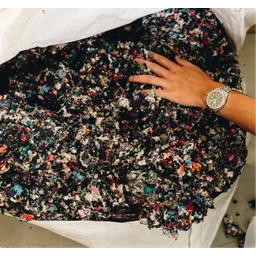
Fairbrics utilizes CO2 waste to produce virgin synthetic fabrics, significantly reducing the fashion industry's reliance on fossil fuels. This process not only minimizes greenhouse gas emissions but also enhances the quality and performance of textiles.
Find Investable Startups and Competitors
Search thousands of startups using natural language—just describe what you're looking for
Textile Manufacturing Startups in France
50 companies matched by StartupSeeker’s semantic search. Average reported funding: $9M.
Snapshot from
ER Ocean Recherche develops bio‑inspired textile fibers and yarns derived from marine biomass such as algae, cyanobacteria, and seafood shells, offering designers and apparel manufacturers low‑impact alternatives to conventional fabrics. The company produces ready‑to‑use materials—including SeiFibre™, SeiYarn™ and coated canvas—through a laboratory‑scale process that reduces water, land and energy use while delivering a reduced material footprint. Revenue is generated by selling these patented fibers and finished garments to fashion brands and textile partners via a B2B supply model.
Syntetica utilizes green chemistry and chemical depolymerization to create sustainable synthetic textiles, starting with nylon. Their process effectively separates raw materials from blended nylon textile waste, a capability traditional recycling methods lack. This technology enables the full circularity of Nylon 6 and Nylon 6,6 streams for industrial use.
This startup operates a clothing platform that offers sportswear made from Tencel, a non-toxic and ecological fiber derived from recycled materials. By providing affordable activewear options, the company addresses the demand for sustainable clothing while promoting environmental responsibility.
Biofluff produces plant-based materials, specifically fur and shearling, to replace animal and synthetic textiles in the luxury fashion industry. By offering sustainable alternatives, Biofluff addresses the environmental and ethical concerns associated with traditional material sourcing.
PiLi biofabricates sustainable, biosourced colorants using industrial fermentation and organic chemistry to replace fossil fuel-derived pigments in various applications, including textiles and inks. This approach significantly reduces CO₂ emissions and addresses the environmental impact of the color industry, which currently relies heavily on non-renewable resources.
Recyc'Elit utilizes a patented eco-depolymerization process to selectively depolymerize complex polyester-based textiles, including colored and multifiber materials, into their original monomers without damaging other fibers. This technology addresses the challenge of recycling difficult PET waste, enabling the production of high-purity, food-grade recycled PET in a closed-loop system.
This startup produces sustainable animal leather using cellular culture, material science, and tissue engineering techniques to create a slaughter-free alternative. By offering a high-strength, durable material with a low environmental footprint, the company enables the fashion industry to significantly reduce CO2 emissions.
The startup manufactures anti-drowning T-shirts equipped with buoyant materials that provide flotation assistance to users in water. This product addresses the critical public health issue of drowning among children, teenagers, and adults by enhancing their safety during aquatic activities.
Fairly Made provides a platform that enhances supply chain transparency for fashion brands by utilizing traceability tools and life cycle assessments (LCAs) to measure environmental and social impacts. This approach addresses the lack of visibility in procurement processes, enabling brands to communicate their sustainability efforts effectively and comply with evolving regulations.
SMALA is an online platform that specializes in the resale of high-quality second-hand clothing and accessories for children, offering items at prices up to 80% off retail. The platform addresses the issue of rapid growth in children, providing a sustainable solution for parents seeking affordable, gently-used apparel while promoting eco-friendly consumption.
BYMOV is a second-hand fashion video social network that connects users through video content showcasing pre-owned clothing. The platform addresses the need for sustainable fashion by facilitating the buying and selling of second-hand items, promoting a circular economy in the fashion industry.
Osium AI provides an AI-powered software platform that accelerates the development and analysis of materials and chemicals. The platform enables users to predict material properties, optimize processes, and manage the entire R&D cycle from formulation to scale-up. This technology helps innovators achieve significant speed advantages and competitive gains in materials science research.
Zozio offers a logistics optimization platform that automates the tracking and analysis of production flows, machine fleet status, and asset movements using indoor and outdoor geolocation technologies. This solution enhances visibility and efficiency in manufacturing processes, enabling real-time data access for improved decision-making and resource management.
Cognyx provides a SaaS platform that uses AI agents and a knowledge‑graph backed ontology to ingest PLM/ERP data and rapidly build, simulate, and optimize Bills of Materials (BOMs) for manufacturers. The collaborative interface supports multi‑BOM management, rule‑based MBSE compliance, and real‑time cost, performance, and CO₂ KPI calculations, enabling faster RFQ responses and reduced engineering cycles. Revenue is generated through subscription licensing and usage‑based fees for AI‑driven optimization services.
Nova Carbon develops high-performance semi-finished products from carbon fiber waste using a patented Long Fiber Realignment technology that preserves fiber length and integrity. This process addresses the significant issue of carbon fiber waste, which is largely landfilled or incinerated, by recycling valuable materials for various industries, including automotive and construction.
Liberare offers easy-on front-closure bras designed specifically for women with limited dexterity, eliminating the need for traditional hooks and wires. This approach addresses the challenge of dressing comfortably and independently for disabled women, ensuring they can focus on their daily activities without the struggle of conventional undergarments.
The startup develops industrialization and engineering software that facilitates the transition from product prototypes to mass production through the implementation of Design for Excellence (DFX) methodologies and optimization of product design. This approach enables partner companies to efficiently reach their target markets by establishing effective industrialization strategies.
MDI provides clothing brands with a platform that integrates Digital IDs to track product usage and lifecycle data. This technology enables brands to gain insights into customer engagement and promote sustainable practices by enhancing the appreciation of clothing and accessories.
The startup specializes in computer vision software that utilizes deep learning algorithms to analyze and interpret visual data. This technology enhances operational efficiency by automating quality control processes in manufacturing, reducing errors and waste.
01supply connects online resellers with vetted dropshipping suppliers specializing in eco-friendly and handmade products. This platform addresses the challenge of sourcing sustainable inventory by providing a streamlined marketplace that ensures quality and ethical sourcing for e-commerce businesses.
Niryo develops plug-and-play robotic arms and an intuitive software platform designed for educational and industrial automation, enabling users to easily automate repetitive tasks. Their solutions enhance productivity and provide hands-on training in robotics, addressing the skills gap in the workforce and the need for efficient manufacturing processes.
Fairmat recycles carbon fiber composites into FairPly, a versatile and sustainable material designed for high-performance applications across various industries. This technology mitigates the environmental impact of carbon fiber waste, which is projected to reach 138 million tons in landfills over the next 50 years.
Altior provides cloud-based industrial management software and ERP solutions designed to enhance operational efficiency for manufacturing businesses. The platform integrates real-time data analytics and resource planning to streamline production processes and reduce operational costs.
Spore Biotechnologies develops microbiological tools that enhance manufacturing processes by ensuring product safety through precise microbial control and monitoring. The company addresses the challenge of contamination in industrial production, enabling factories to produce safer products efficiently.
baCta produces carbon-negative natural rubber by utilizing engineered microorganisms that convert CO2 and renewable feedstocks into isoprene, which is then polymerized into high-quality rubber. This technology addresses the unsustainable nature of traditional rubber production, offering a resilient and hypoallergenic alternative while significantly reducing carbon emissions.
The startup manufactures a treatment process that enhances cellulosic substrates for packaging, producing transparent, recyclable, compostable, and biodegradable materials. This enables businesses to transition to eco-friendly, paper-based packaging solutions, effectively reducing reliance on plastic and minimizing environmental impact.
Mercateam provides a centralized staff management platform that integrates skills tracking, training management, and automated scheduling for production teams. This software addresses the inefficiencies of manual planning and outdated skills data, enabling companies to optimize workforce allocation and enhance operational agility.
The startup develops plant-based hair color products using vegetable dyes to provide a safer alternative to conventional chemical hair colorings. This approach enables customers to achieve vibrant hair color while minimizing exposure to harmful substances and promoting sustainable beauty practices.
Calyxia manufactures biodegradable microcapsules and microparticles that enhance the performance of agricultural, consumer care, and advanced materials products while meeting sustainability goals. Their technology addresses the issues of microplastic pollution and inefficient product delivery by providing eco-engineered solutions that improve crop yields, sensory experiences, and material functionalities.
PureNat develops a patented active textile technology that utilizes photocatalysis to continuously eliminate volatile organic compounds (VOCs) and microorganisms from the air without generating harmful byproducts. This solution significantly reduces energy consumption and maintenance costs while extending filter lifespan, addressing the critical issue of indoor air pollution and its impact on health and the environment.
Lynceus provides real-time AI-driven insights into critical manufacturing processes, enabling engineers to predict outcomes and detect failures at each processing step. This technology reduces unnecessary measurements and accelerates troubleshooting, optimizing quality, throughput, and costs without significant capital investment.
The startup operates an e-commerce platform that provides a wide range of ethically produced clothing, including jeans, tops, and shoes, directly to consumers. By facilitating convenient access to sustainable fashion, the platform addresses the lack of affordable options for consumers seeking ethical apparel.
Tekyn designs and manufactures a connected laser cutting line that utilizes smart cutting technology for on-demand fashion textiles, enabling automated garment customization without the need for pre-existing patterns. This approach optimizes material usage and production efficiency, addressing the challenges of waste and slow response times in traditional textile manufacturing.
BrightClue utilizes deep learning and machine learning algorithms to analyze complex technical databases, enabling businesses to extract actionable insights from large volumes of data. This technology enhances data-driven decision-making, reduces manufacturing costs by up to 25%, and accelerates product development cycles by minimizing the need for multiple iterations.
The startup operates an industrial upcycling platform that transforms surplus and second-hand materials into new clothing and accessories through a systematic revaluation and production process. This approach reduces textile waste, lowers carbon emissions, and minimizes water usage in the fashion industry.
Faactopi offers Manufacturing as a Service, enabling innovators to scale prototypes into mass‑produced hardware without upfront capital investment. Using a pay‑as‑you‑use model, the company provides virtual‑twin line simulation, agile production management, and full‑service manufacturing for complex mechatronics across robotics, aerospace, green tech, and health tech. Clients benefit from reduced time‑to‑market, flexible volume adjustments, and industrial‑grade quality while converting CAPEX risk into OPEX expenses.
This startup manufactures organic feminine hygiene products, including tampons, sanitary napkins, and panty liners made from unbleached organic cotton. Their products provide effective, soft, and comfortable protection while minimizing the risk of allergies and irritation associated with conventional materials.
This company specializes in programming robotics solutions tailored for hybrid manufacturing environments. They provide the necessary software and integration services to automate complex production workflows. The core value is enabling manufacturers to efficiently combine different production methods using advanced robotic control systems.
Aletiq provides an online Product Lifecycle Management (PLM) software that centralizes technical data management for industrial companies, significantly reducing the time spent on managing CAD files, drawings, and BOMs. The platform enhances team collaboration through automated process management and ensures compliance with ISO 9001 by tracking the evolution of technical data throughout its lifecycle.
Paradigme is a second-hand fashion platform that curates and refurbishes high-quality apparel and accessories from renowned brands, ensuring each item meets strict quality standards. The platform addresses the need for sustainable fashion by providing consumers with access to stylish, affordable clothing while promoting the circular economy.
HKVOR extracts high-purity keratin peptides and hydrolysates from organic waste like human hair and sheep wool. Our clean chemical process transforms this underutilized resource into sustainable protein derivatives for cosmetics, medical devices, bioplastics, and nutraceuticals.
Seprify produces high‑performance functionalingredients derived from renewable cellulose for use in coatings, cosmetics, food, inks, pharma, and other industries. Their plant‑based materials are biodegradable, safe, and designed to replace traditional petrochemical additives while reducing carbon emissions. The company offers ready‑to‑use, sustainable solutions that enhance product performance and support circular bioeconomy goals.
Olikrom designs intelligent pigments that respond to temperature, light, and pressure changes, enabling applications in various industries such as textiles and coatings. These pigments provide real-time visual feedback, enhancing product functionality and user experience by indicating environmental conditions.
TETMET utilizes a vertically integrated AI and Robotics platform to efficiently manufacture large-scale architectured materials and lattices. This Adaptive Spatial Lattice Manufacturing (ASLM) process produces ultralight, high-strength structures with significantly reduced material and energy consumption. The company enables industries like Automotive and Aviation to adopt advanced, sustainable, and cost-effective structural designs.
CrushON connects circular fashion professionals with over 2,700 suppliers to facilitate the integration of second-hand fashion into retail offerings, enabling brands to launch profitable and sustainable circular fashion strategies. The platform addresses the challenge of responsible textile consumption by providing tailored solutions for managing second-hand inventory across both online and offline channels.
GaiaGlobe provides a digital platform for farmers and manufacturers to streamline operations and improve productivity. The platform offers integrated tools for resource management and workflow optimization, helping businesses achieve their efficiency goals.
This startup manufactures graphene-based additives and coatings that enhance thermal and electrical conductivity while improving mechanical properties and reducing product weight. Their solutions enable manufacturers to increase efficiency and performance, contributing to sustainability goals without compromising strength.
Kobeya offers a digital platform that transforms manufacturing instructions into interactive, real-time tools for production teams, enhancing operational performance and quality tracking. By streamlining communication and data access, the software reduces waste and improves productivity by up to 30%, while minimizing errors and paper usage by 90%.
This startup manufactures natural material products for luxury brands, research laboratories, and prototyping workshops, utilizing advanced material engineering techniques to enhance the properties of various natural substances. By reintegrating these materials into production processes, clients can unlock new creative applications and improve sustainability in their product offerings.