This startup operates a plastics recycling facility that transforms polyethylene waste through processes such as sorting, washing, and extrusion. By converting plastic waste into sustainable materials, the company helps reduce environmental pollution and lower CO2 emissions associated with traditional plastic production.
Find Investable Startups and Competitors
Search thousands of startups using natural language—just describe what you're looking for
Plastics And Rubber Products Startups in Netherlands
50 companies matched by StartupSeeker’s semantic search. Average reported funding: $11M.
Snapshot from
Paques Biomaterials develops a biodegradable biopolymer, Caleyda®, using microbial fermentation of organic residual streams without genetic modification or fossil resources. This technology provides a natural alternative to conventional plastics, effectively eliminating harmful microplastics and supporting a circular economy.
Healix Clean Tech utilizes advanced purification technology to transform plastic waste from the fishing and farming industries into certified circular plastics for the manufacturing supply chain. This process addresses the critical issue of plastic pollution by keeping plastic out of the environment and reducing reliance on virgin materials.
Veridis offers MADSCAN®, an industrial-scale thermal analysis technology that provides over 99% accurate insights into the composition of complex plastic streams, facilitating effective quality control and recycling processes. By enabling precise fraction and weight ratio measurements, MADSCAN® increases the value of recyclates by over 25% and optimizes both incoming and outgoing recycling feedstock.
StamLabs develops 3D printed anatomical models that provide tactile, hands-on learning experiences for students and healthcare professionals, enhancing their understanding of human anatomy beyond traditional memorization methods. By utilizing plant-sourced plastics for sustainability, StamLabs addresses the need for accessible, accurate, and eco-friendly educational tools in anatomical studies.
Solarge manufactures lightweight, fully recyclable solar panels using advanced polymer technology, which significantly reduces CO2 emissions during production and eliminates harmful PFAS chemicals. Their solution addresses the need for sustainable energy sources by providing a circular product that enhances the efficiency of solar energy generation while minimizing environmental impact.
Nature's Principles utilizes a patented fermentation platform to convert diverse residual feedstocks into bio-based lactic acid, a versatile chemical used in bioplastics and food preservation. The company addresses the challenge of waste management by transforming side streams into valuable products, promoting a circular economy in chemical production.
GoDroppie incentivizes recycling by offering a mobile app and a network of drop-off locations where users earn cash rewards for depositing sorted recyclables. This system makes waste management financially beneficial, encouraging higher recycling rates for materials like plastics, textiles, and electronics.
Manuevo utilizes advanced 3D printing technologies to manufacture production-grade items on demand, enabling the creation of complex geometries in a single build. This approach significantly reduces assembly time and accelerates product development cycles, providing reliable quality across a wide range of materials.
SwapBox provides a reusable packaging service that includes washing, rental, and tracking technology to help businesses reduce packaging waste and comply with environmental regulations. By offering pay-per-use rental options and advanced inventory management through barcodes and RFID, SwapBox enables food services, workplaces, and events to streamline operations and lower disposal costs.
Circularise provides a product traceability platform designed to manage supply chain compliance and data integrity across complex value chains. The platform automates supplier data collection and internal bookkeeping to support frameworks like ISCC PLUS and REDcert-EU. This enables businesses to generate verifiable Digital Product Passports (DPPs) for regulatory readiness and enhanced sustainability reporting.
Antfarm develops AI-powered robotic sorters that utilize swarm robotics to enhance waste sorting efficiency in Material Recovery Facilities (MRFs), achieving sorting speeds up to eight times faster than existing solutions. This technology addresses the global waste crisis by improving material recovery rates and purity, ultimately increasing profitability for recycling operations.
MantiSpectra develops miniaturized hyperspectral sensor chips called ChipSense for material analysis and health insights. These sensors integrate into handheld devices and monitoring systems for automated production process control and traceability. The technology also enables biometrics and smart home automation to enhance consumer product functionality.
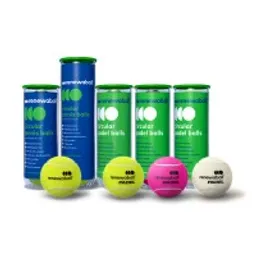
This startup manufactures circular tennis and padel balls by collecting, shredding, and separating used balls, directly addressing the environmental impact of traditional ball production. Their sustainable products contribute to the achievement of Sustainable Development Goals 12, 13, and 14, offering customers an eco-friendly alternative that reduces waste and pollution.
Smyle produces eco-friendly toothpaste tablets and a sonic electric toothbrush designed to eliminate plastic tubes and microplastics from oral care routines. Their products utilize hydroxyapatite for remineralization, effectively preventing cavities and plaque while significantly reducing plastic waste in dental hygiene.
Outlander Materials utilizes biotechnology to convert food waste, particularly from breweries, into compostable materials like UnPlastic, which serve as non-toxic alternatives to single-use plastics. This process addresses the issue of plastic pollution by creating biodegradable products that do not break down into harmful microplastics, thereby promoting a circular economy.
The startup produces crude lignin oil and crude sugar oil from agricultural and forestry residues, providing a bio-based alternative to fossil fuels for the petrochemical industry. This sustainable raw material can replace fossil crude oil in the production of materials, chemicals, and fuels, offering a renewable source for companies seeking to reduce their carbon footprint.
PHOTANOL utilizes cyanobacteria to convert CO₂ into renewable chemicals, enabling the production of sustainable materials for various applications, including plastics and biofuels. This approach addresses the reliance on fossil resources by creating a circular economy in the chemical industry.
Terrawaste utilizes proprietary hydrothermal liquefaction technology to convert diverse waste streams, including mixed plastics and organic matter, into valuable bio-crude oil, biochar, and chemicals. This process offers a sustainable solution for waste valorization, enabling businesses to reduce landfill waste and create new revenue streams from byproducts.
CEAD specializes in large format thermoplastic composite 3D printing, utilizing modular robot-based systems to produce high-strength, lightweight components for various industries. Their technology reduces production time and labor costs while enabling the creation of complex geometries that traditional manufacturing methods cannot achieve.
UBITE provides bio‑based polymer materials that match the performance of traditional plastics while being fully reusable and recyclable. Its platform enables hospitality, travel, and consumer brands to customize premium tableware and packaging with heat‑resistant, porcelain‑like finishes, supported by a closed‑loop take‑back system.
Layco develops reusable medical devices, such as the vela® vacuum extractor, designed for single-operator use in emergency obstetric care settings. These devices enhance patient safety and comfort while significantly reducing environmental impact by minimizing biomedical waste and CO2 emissions through their sterilizable and reusable components.
Arceon engineers and manufactures proprietary carbon-ceramic composite materials designed for high-performance applications in extreme environments exceeding 1500 °C. These materials offer superior thermal resistance, damage tolerance, and lower density compared to traditional superalloys and carbon-carbon. The company provides near-net-shape components like propulsion nozzles and heat shields for the aerospace, defense, and industrial sectors.
This company offers a circular solution for baby and children's products through flexible rental subscriptions or outright purchase with a guaranteed buyback option. They provide access to premium brands for items like strollers, car seats, and nursery gear, ensuring all rented products are professionally cleaned. This model provides affordability, reduces waste, and eliminates the hassle of selling used goods.
The startup develops bio-based aromatics by converting biomass residues into chemical ingredients that serve as essential raw materials for coatings, adhesives, and insulating foam. This process provides a sustainable alternative to fossil-derived aromatics, enhancing product performance while reducing reliance on non-renewable resources.
The startup develops a hand brace technology that utilizes a proprietary instant 3D hand scanner and automation software to create customized orthotics and prosthetics. This system enables medical professionals to efficiently design and produce tailored braces, addressing the need for personalized patient care in orthotic solutions.
Foamlab manufactures fully compostable nanocellulose foams using a microbial fermentation platform that produces bacterial nanocellulose with tunable density, rigidity, and porosity. The resulting foams deliver mechanical strength, thermal and acoustic insulation comparable to conventional polymer foams while being biodegradable under industrial composting, enabling manufacturers in packaging, building insulation, automotive, aerospace, and consumer goods to replace petro‑based foams with a sustainable, performance‑matched material.
Nile Recycling processes post-consumer PET plastic into high-quality recycled PET (rPET) pellets. Their advanced sorting and proprietary recycling methods ensure material purity and consistency, enabling manufacturers to integrate sustainable rPET into their production lines. This provides a reliable supply of rPET for eco-friendly product development and the circular economy.
The startup manufactures recycled construction materials by utilizing physical separation technologies and a new heated air separation method to convert end-of-life concrete into clean aggregates and cement. This process provides clients with low-cost, eco-friendly concrete, addressing the need for sustainable building materials in the construction industry.
The Good Roll produces 100% sustainable toilet paper made from bamboo and recycled paper, eliminating the need for tree harvesting and harmful chemicals. The company addresses the lack of access to clean sanitation facilities by donating 50% of its profits to build toilets in Ghana, improving hygiene and health for underserved communities.
Circulair employs advanced recycling technologies to convert commercial waste materials into reusable resources, effectively minimizing landfill contributions. This process mitigates the depletion of raw materials by transforming waste into valuable inputs for the supply chain.
VanHier transforms agricultural residues and fiber‑crop by‑products into FytoPanel, a 100 % biobased board that matches the strength and stability of conventional MDF. The water‑based fiber matting and hot‑press process eliminates synthetic resins, reducing CO₂ emissions by up to 70 % and delivering a formaldehyde‑free product certified for indoor air quality. Panels are offered in multiple thicknesses and densities, can be recycled or composted at end‑of‑life, and serve architects, builders, and furniture makers seeking sustainable material solutions.
Saga Medical Solutions designs reusable kidney dishes for healthcare facilities, aiming to reduce waste and improve patient care. Their circularity model involves collaboration with hospitals, waste management, and production companies to ensure the product's sustainable lifecycle.
Lennart Group provides advanced machinery for sustainable paper packaging production, enabling manufacturers to replace plastic with eco-friendly alternatives. Their solutions include specialized equipment for applying water-based barrier coatings and for automated blanking, folding, and gluing of paper-based packaging.
Rezolve Medical develops personalized orthopedic solutions, including compliant ankle-foot orthoses, to optimize patient gait and adherence. The company focuses on functionally personalized, 3D-printed medical braces based on biomechanical research. Their solutions aim to improve mobility outcomes for individuals with conditions like drop foot.
PAKT provides a turnkey reusable‑packaging service for glass containers, operating high‑throughput washing facilities that minimize energy, water and chemical use and handling both primary bottles and secondary crates. The company also manages storage, inventory tracking, and logistics to return cleaned containers to manufacturers and retailers, and offers consulting to design compliance‑ready reuse loops. Clients achieve material cost reductions and significant CO₂ emission cuts while meeting circular‑economy regulations.
The startup produces high-performance running shoes made from plant-based materials, ensuring they are plastic-free and sustainably manufactured. By offering affordable footwear options, the company addresses the demand for environmentally friendly athletic gear without compromising on performance.
Leaf.it is developing a biodegradable seedling protection product that encases young trees, optimizing hydration and providing a barrier against animals and parasites. This solution addresses the 30% seedling mortality rate caused by environmental threats, significantly reducing the labor and costs associated with tree planting.
CupHub offers Casey, a compact, battery‑free device that rinses and sanitizes reusable menstrual cups using a sealed water reservoir activated by shaking. The one‑hand operation enables discreet cleaning in public restrooms or while traveling, with used water poured directly into a toilet, supporting sustainable menstrual care for individual users and NGOs in low‑resource settings.
Eve Reverse provides natural‑fiber reinforced composites with biobased polymer matrices that deliver net carbon‑negative emissions and high strength‑to‑weight performance. The company offers ready‑made Eve Tiles, full product‑development services, and carbon‑accounting tools that integrate with standard composite processing methods for manufacturers in construction, automotive and consumer‑goods sectors.
BioFire supplies a 100 % biobased, biodegradable flame‑retardant polymer derived from bacterial extracellular polymeric substances (EPS) that can be added as a drop‑in additive to thermoplastic composites and coating formulations. The EPS matrix provides dual flame‑retardant action—high‑char formation and non‑toxic gas release—enabling effective fire protection at 15–30 wt % loading while preserving mechanical properties and processing efficiency.
Refirst provides technology solutions that enable producers and brands to implement circular take-back programs for their products. This helps them maximize value recovery through optimized reuse, refurbishment, and recycling processes.
The startup utilizes eddy current technology to enhance defect detection in carbon fiber composites, enabling the production of lighter and more efficient materials. This approach allows clients to create cost-effective carbon composites for applications such as aviation and renewable energy, improving resource efficiency in manufacturing.
This startup manufactures foldable three-dimensional food printers that utilize both standard plastic filament and food-safe pastes to create customized food shapes, tastes, and textures. By enabling precise food design, the technology addresses the limitations of traditional food preparation methods, enhancing culinary creativity and personalization in the food industry.
Ioniqa uses a proprietary aqueous or glycol‑based depolymerization process to break down mixed‑color PET waste into its monomers, which are then repolymerized into PET that matches virgin material and meets food‑contact standards. The technology accepts unsorted streams, operates at industrial scale, and provides PET bottle manufacturers, packaging brands, and waste‑management firms with a cost‑effective source of high‑purity recycled PET.
Blade–Made transforms decommissioned wind turbine blades into functional, aesthetic, and sustainable urban furniture, playgrounds, and infrastructure. This process offers a design strategy for difficult-to-recycle materials, significantly reducing landfill use and virgin resource consumption. The company delivers products with up to 90% carbon reduction compared to conventional alternatives.
This startup offers an online platform that connects engineers and designers with a global network of professional 3D printing services, enabling users to upload 3D files and receive competitive quotes based on material and location preferences. The platform specializes in materials such as tungsten, tungsten carbide, and copper, allowing users to compare the mechanical, chemical, and electrical properties of various 3D printing options.
The startup develops medical healthcare products specifically designed for patients with anal fistulae, utilizing disposable applicators for manual application. Their products minimize irritation and discomfort, enhancing patient mobility and overall quality of life.
This startup designs and manufactures wheelchairs that incorporate features such as a modular frame, smooth motion fold, and foldable armrests to enhance mobility for individuals with physical disabilities. The wheelchairs also include practical elements like a storage compartment and a bag hook, addressing the need for compact and functional mobility solutions.
Boldwill produces sustainable sportswear using eco-friendly materials that minimize environmental impact while promoting health. The company addresses the issue of harmful plastics in athletic apparel, offering a healthier alternative for both consumers and the planet.