Addverb develops modular software and intelligent robots for warehouse automation, enhancing material movement, storage, and order fulfillment processes. Their solutions address inefficiencies in intralogistics operations, enabling clients to optimize inventory management and reduce handling costs.
Find Investable Startups and Competitors
Search thousands of startups using natural language—just describe what you're looking for
Warehouse Automation Startups
50 companies matched by StartupSeeker’s semantic search. Average reported funding: $49.4M.
Snapshot from
Brightpick provides warehouse automation solutions designed to simplify complex logistics operations. The company integrates robotics and AI to enhance picking efficiency and throughput within fulfillment centers. This technology aims to increase order accuracy and reduce manual labor costs in modern warehousing environments.
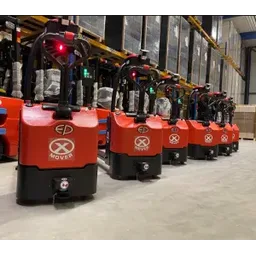
Movu Robotics provides modular warehouse automation solutions, including Autonomous Mobile Robots (AMRs) and Automated Storage and Retrieval Systems (ASRS). Their plug-and-play approach simplifies integration, enhancing space utilization and operational efficiency for logistics, e-commerce, and retail businesses.
Dexterity develops AI-powered robotic systems for logistics and warehouse automation, enabling real-time palletization, depalletization, and parcel induction without the need for software integration. Their technology addresses labor shortages and operational inefficiencies by streamlining workflows and enhancing safety in high-volume environments.
Ultra develops intelligent, purpose-built robots designed for end-to-end task automation within warehouses, starting with e-commerce order packaging. These systems automate repetitive, variable, and physically demanding tasks to increase operational flexibility. The company enables frictionless real-world innovation by making physical work as adaptable as software.
Mothership provides AI‑driven robots that automate complex warehouse and factory workflows, unifying robots, humans, inventory, and order data under a single control brain. Its platform offers real‑time state monitoring, reinforcement‑learning optimization, and seamless integration with enterprise systems to boost throughput, reduce labor costs, and adapt to fluctuating demand. Customers can coordinate multibody orchestration across the entire fulfillment process, improving productivity and meeting dock SLA requirements.
Onward Robotics provides automated picking solutions for warehouses, utilizing advanced computer vision and robotic arms to identify, grasp, and transport items. Their systems integrate with WMS to boost throughput, improve order accuracy, and reduce labor costs in distribution centers.
Mytra develops software-defined warehouse robotics that automate material handling tasks using a modular system of bots, AI software, and durable steel cells. This technology increases operational efficiency by enabling flexible inventory movement and optimizing storage density, achieving 99.999% system uptime and doubling throughput compared to traditional methods.
Stow Robotics (brand Movu) provides modular, software‑orchestrated robotic systems that automate pallet storage, goods‑to‑person picking, and piece‑picking in warehouses. Its portfolio—including Atlas shuttles, Escala fulfillment robots, iFollow material handlers, and Eligo data‑driven pickers—can be retrofitted to existing layouts and integrated with WMS, offering scalable deployment and optional short‑term rentals to boost throughput while reducing labor costs.
Rapyuta Robotics develops cloud-connected multi-robot systems specifically designed for logistics warehouses, utilizing AI data visualization to enhance operational efficiency. Their technology automates repetitive and hazardous tasks, allowing workers to focus on more complex and creative responsibilities, ultimately improving productivity and supporting sustainable business growth.
Vecna Robotics provides automated material handling solutions using robotic pallet jacks and autonomous navigation technology to enhance warehouse efficiency. Their CaseFlow™ system automates 90% of warehouse travel, doubling worker throughput and achieving a return on investment in under one year.
Accio Robotics designs and manufactures warehouse automation solutions, including the AccioPick Air, which utilizes a bin-to-person system to enhance order picking efficiency. Their technology addresses high warehousing costs by reducing manual picking time and optimizing space utilization, ultimately improving profitability for fulfillment centers.
AutoPallet Robotics provides cost-effective and flexible automation for warehouse case handling challenges like labor shortages and rising fulfillment costs. Their unique solution arbitrarily picks, sorts, buffers, and palletizes cartons in parallel across large areas. This platform supports inbound pallet building, outbound mixed SKU pallet creation, lumping, case picking within existing racking, and sortation applications.
Hai Robotics provides autonomous mobile robots and a cloud‑native Warehouse Execution System that automate case handling, pallet picking, and item retrieval in multi‑level warehouses. The robots use lidar‑SLAM and vision‑guided navigation, support up to 300 kg payloads, and integrate via REST/OPC UA APIs with existing WMS/ERP systems to increase storage density, speed order fulfillment, and reduce labor costs.
Covariant develops the Covariant Brain, an AI robotics platform designed to automate warehouse operations. This platform utilizes a multimodal robotics dataset to enable robots to pick diverse SKUs with high autonomy from day one. The system leverages fleet learning to adapt to changing business needs and scale fulfillment capabilities.
inVia Robotics provides a Robots-as-a-Service solution that integrates autonomous mobile robots and AI-powered Warehouse Execution System software to enhance warehouse productivity. Their technology enables e-commerce distribution centers to achieve up to 5x productivity increases while minimizing labor costs and utilizing existing infrastructure.
SIMPL Automation provides the ADAPTIV ASRS ecosystem for scalable warehouse automation solutions. This modular platform supports incremental upgrades from manual pick-to-cart operations to high-speed Goods-to-Person (GTP) fulfillment. The brownfield-friendly design allows facilities to enhance performance and density without disruptive system replacements.
Pickommerce AI Robotics develops autonomous pick and pack systems utilizing advanced robotics and artificial intelligence for warehouse logistics. Their PickoBot solution integrates computer vision and specialized grippers to accurately handle diverse products in e-commerce fulfillment environments. This technology streamlines operations by automating manual picking processes and optimizing packing efficiency within existing ASRS infrastructure.
Attabotics offers a modular robotic warehousing system that utilizes three-dimensional automated storage and retrieval technology to optimize space and efficiency in fulfillment operations. By reducing warehouse footprint by up to 85% and labor costs by 75%, the platform enables faster delivery times and lowers capital expenditures for businesses.
Fox Robotics manufactures the FoxBot, an autonomous trailer loader/unloader that utilizes robotics and machine learning to automate the loading and unloading of trailers at a rate of 25 pallets per hour. This technology reduces labor costs by over 40% and allows a single operator to manage multiple FoxBots, addressing labor shortages and enhancing operational efficiency in warehouse environments.
VIMAAN provides AI-driven computer vision solutions that enhance inventory tracking in warehouses by automating cycle counting, order validation, and real-time inventory visibility. This technology significantly reduces labor costs and improves inventory accuracy, enabling warehouses to achieve nearly instant ROI and minimize mis-shipments.
Third Wave Automation develops a Shared Autonomy Platform that combines cloud robotics and machine learning to enhance material handling with autonomous forklifts. This technology addresses labor shortages in warehousing by enabling one operator to manage multiple autonomous units, resulting in significant cost reductions and improved safety.
Locus Robotics develops autonomous mobile robots (AMRs) equipped with AI-driven navigation and task interleaving capabilities to enhance warehouse operations. Their technology increases productivity by 2-3 times and reduces labor costs by up to 50%, addressing inefficiencies in e-commerce fulfillment processes.
SVT Robotics offers the SOFTBOT® Platform, a tech-agnostic integration solution that enables businesses to deploy, monitor, and scale warehouse automation without the need for custom coding. This platform addresses integration challenges by providing prebuilt connectors that enhance visibility and reduce downtime across supply chain operations.
Bottobo Robotics develops autonomous mobile robots (AMRs) for supply chain and logistics operations. Their solution integrates proprietary Warehouse Intelligence System (WIS) software with advanced navigation technology for seamless warehouse automation. The AMRs utilize premium components and sophisticated fleet management for reliable, 24/7 material handling.
This startup develops a software platform for warehouse automation that features intuitive interfaces and requires minimal technical expertise. By enabling businesses to automate logistics processes, the solution enhances operational efficiency and reduces costs, allowing for scalable growth.
TREW provides automated material handling solutions that integrate robotics and conveyor systems to enhance operational efficiency in warehouses and manufacturing facilities. The company addresses labor shortages and inefficiencies in material transport, enabling seamless order fulfillment and improved productivity for integrators and end users.
The Rubic provides a warehouse-agnostic, autonomous robotic system designed to automate logistics operations within existing facilities without requiring custom infrastructure. Their FreedomPick technology handles boxes up to 90 lbs and operates extended shifts through opportunistic charging. This solution offers a low-CAPEX path for industries like 3PL, e-commerce, and manufacturing to increase facility throughput.
InLog Robot provides warehouse automation solutions, including shuttle and sorter systems, to optimize material flow and storage. Their software development services further enhance these systems, creating integrated and efficient warehouse operations. This allows businesses to improve throughput and reduce operational costs.
Exotec provides a warehouse automation solution featuring the Skypod system, which utilizes a fleet of collaborative mobile robots to enhance order preparation efficiency. This technology optimizes space utilization and productivity, addressing the challenges of slow order fulfillment and limited storage capacity in modern warehouses.
The startup offers a subscription-based warehouse robot service that enables users to operate warehouses efficiently with minimal training. Additionally, it provides a sharing platform for unused warehouse space, allowing businesses to optimize storage costs and respond to fluctuating inventory needs.
Yondu develops an embodied AI platform designed to automate diverse logistics tasks within existing warehouses using off-the-shelf robots. The system leverages real-world tele-operation data collection to train robots for faster and more reliable performance in brownfield environments. This approach enables affordable, advanced robotics integration without requiring costly infrastructure overhauls.
The startup develops automated storage technology that integrates multi-purpose hardware with advanced software to optimize warehouse and terminal operations. This system enhances logistics efficiency by enabling autonomous storage, sequencing, and sorting of parcels for warehouses, distribution centers, and micro-fulfillment centers.
Pio offers a mobile app that automates warehouse operations through a plug-and-play system, utilizing robots to optimize inventory management and order fulfillment. This technology reduces labor requirements by up to 80% and increases storage efficiency, allowing businesses to process up to 360 order lines per hour with 99.9% accuracy.
This company provides a Robotics Fulfillment Platform that integrates and orchestrates diverse warehouse robotics and automation systems. The platform utilizes AI/ML and simulation tools to optimize task assignment between robots and human workers, increasing throughput and flexibility. It enables rapid realization of warehouse automation strategies through plug-and-play integration with WMS and ERP systems.
6 River Systems provides a warehouse automation system that combines autonomous mobile robots (AMRs) with patented fulfillment algorithms to enhance operational efficiency in e-commerce and retail. This technology reduces the cost per unit shipped and improves throughput, enabling businesses to meet increasing customer demands while minimizing labor challenges.
The startup develops a robotic system that utilizes autonomous movement technology and multi-robot control software to enhance operational efficiency in e-commerce warehouses. This technology reduces labor intensity and increases throughput, addressing the challenges of high demand and workforce limitations in logistics.
Provides end-to-end robotic automation solutions for warehouses, integrating AI-powered software with automated guided vehicles (AGVs) for tasks like picking, packing, and sorting. This system reduces labor costs, improves order accuracy, and optimizes warehouse space utilization, addressing challenges such as labor shortages and inefficiency in logistics operations.
Zeal Robotics develops autonomous mobile robots (AMRs) specifically designed for warehouse automation. Their technology focuses on advanced navigation and control systems to optimize material handling within logistics environments. The company provides solutions to enhance operational efficiency and throughput in modern warehousing facilities.
LAB0 provides an AI-powered autonomous logistics system, RoboGlide, designed to automate complex warehouse tasks like container unloading and palletizing. This physical AI solution addresses labor shortages and operational inefficiencies in global supply chains. The modular system integrates seamlessly with existing infrastructure to deliver measurable ROI through complete automation.
Navflex develops autonomous robotics systems for trailer and container loading and unloading operations. Their advanced AI adapts to dynamic dock environments and various pallet conditions for reliable automation. This technology increases warehouse throughput while maintaining safety alongside human workers and forklifts.
Cobotix provides affordable warehouse automation through a range of collaborative robots, from simple autonomous pallet trucks to fully autonomous AMRs and fleet‑management systems. Customers can start with a single robot on a fixed route for as little as €500 per month, then scale to multi‑robot fleets with dynamic navigation and integration to WMS/ERP. The solution is designed to run safely alongside staff, reducing wait times, errors, and repetitive transport tasks.
The startup operates a logistics automation platform that utilizes predictive analytics to enhance warehouse organization based on storage needs and distribution schedules. By providing a cost-effective alternative to machine vision, the platform enables businesses to implement mass automation efficiently, improving operational efficiency and reducing overhead costs.
The startup develops a robotics system designed for omnichannel logistics, featuring an AI-driven automated warehouse that integrates e-commerce functionality. This solution enhances operational efficiency and space optimization for retailers, enabling them to manage inventory effectively while controlling costs.
Density Robotics develops high-density robotic storage and retrieval systems for warehouses. Their solutions enable businesses to maximize storage capacity within existing footprints and automate inventory management, improving operational efficiency.
Caja Robotics provides a cloud‑native, AI‑driven order‑fulfillment platform that coordinates vertically and horizontally moving robots with modular workstations to automate picking in warehouses. The system integrates with any WMS via RESTful APIs, uses a 4‑dimensional navigation engine for real‑time route optimization, and delivers up to 99.8 % pick accuracy while reducing labor costs by more than 60 %.
Symbotic provides an AI‑driven warehouse automation platform that combines autonomous mobile robots with a modular high‑density storage system. The solution digitizes each case, uses computer‑vision‑guided robots to pick, transport, and palletize items with sub‑second latency, and integrates via open APIs with existing WMS/ERP systems to reduce labor, increase throughput, and improve inventory agility for large retailers and CPG manufacturers.
AdVentura Works transforms forklifts into remotely operated machines, equipped with sensors and 360-degree video feeds. Their platform enables remote operators, assisted by AI driver-assist systems, to safely and efficiently move materials within warehouses, integrating with existing warehouse management systems for seamless local and remote team collaboration.
This startup develops smart robotic technology for warehouses, including automated packaging and warehousing systems, as well as logistics sorting solutions. Their technology enhances operational efficiency by providing real-time tracking and analysis of goods delivery flows, addressing the challenges of labor shortages and inefficiencies in logistics.
Symbotic provides integrated automation solutions for warehouses and distribution centers using robotics and artificial intelligence to optimize inventory management and order fulfillment. This technology addresses inefficiencies in supply chain operations, reducing labor costs and improving throughput.