The startup develops an AI platform that optimizes computer vision by transforming large foundation models into smaller, task-specific models. This approach reduces resource consumption and accelerates the deployment of computer vision applications for clients.
Find Investable Startups and Competitors
Search thousands of startups using natural language—just describe what you're looking for
Vision Transformer Startups
50 companies matched by StartupSeeker’s semantic search. Average reported funding: $60.1M.
Snapshot from
Matrice provides an enterprise Vision AI factory for building, training, and deploying computer vision models using Transformers and CNN architectures. The platform streamlines workflows from data ingestion and annotation to scalable, multi-cloud deployment with integrated drift monitoring. This infrastructure accelerates the development of specialized AI applications across industries like manufacturing, healthcare, and retail.
The startup offers a visual recognition platform that autonomously processes diverse visual data, including infrared and X-ray images, while accurately tagging objects of interest. This technology enhances operational efficiency and ensures high-quality results for clients across various industries.
PlusAI provides SuperDrive™, an AI-powered autonomous driving platform that enables Level 4 self‑driving trucks for long‑haul freight. The system uses a three‑layer redundancy architecture with vision‑language reasoning and transformer‑based motion planning to deliver reliable perception, decision‑making, and safety, and can be integrated by OEMs and Tier 1 suppliers into factory‑built trucks worldwide.
Odyssey offers a pre‑trained multimodal transformer that jointly processes audio waveforms and video frames, exposed through a sub‑100 ms API and SDKs for Unity, Unreal, Python, C++, and JavaScript. The platform enables game studios, edtech developers, simulation engineers, and ad tech teams to embed unified perception, reasoning, and generative capabilities with optional fine‑tuning and on‑premise deployment for domain‑specific adaptation and data‑privacy compliance.
The startup develops infrastructure systems utilizing silicon carbide (SiC) devices and proprietary high-frequency transformers to enhance the efficiency and resilience of electrification. Their technology enables clients to optimize electricity transformation, addressing the challenges of energy loss and system reliability in modern power distribution.
Etched.ai develops Sohu, the world's first ASIC specifically designed for transformer models, enabling AI computations to be executed at least ten times faster and more cost-effectively than traditional GPUs. This technology allows for real-time processing of large-scale AI models, enhancing applications such as voice agents and content generation.

SenseTime is an AI software company that develops computer vision and deep learning technologies to enhance automation in various industries. Their solutions address inefficiencies in data processing and analysis, enabling businesses to make faster, data-driven decisions.
Provides AI-powered computer vision systems with integrated NVIDIA GPUs for on-device training and real-time defect detection in manufacturing. By requiring less data and enabling rapid deployment, it identifies subtle and previously unseen defects, improving inspection accuracy and reducing production escapes in complex environments.
Positron develops purpose-built hardware systems specifically designed to accelerate Transformer Model Inference. These systems offer superior performance per dollar and performance per watt compared to existing solutions like NVIDIA. The platform seamlessly supports any trained HuggingFace Transformers Library model for efficient deployment via an OpenAI API-compliant endpoint.
Visionary.ai develops an AI-driven image signal processor that enhances video quality in real-time, particularly in low-light and challenging conditions. The technology improves image clarity by reducing blur and noise while enabling superior recognition of objects such as faces and license plates.
Oktogrid provides a non-invasive sensing technology that enables electricity providers to install a digital interface on any transformer in under ten minutes, facilitating real-time performance monitoring. This solution addresses the lack of accessible data from aging distribution transformers, allowing for improved asset management and enhanced grid capacity through predictive analytics.
Yi develops machine vision technology that integrates AI-driven visual search and real-time object recognition to enhance content marketing and retail experiences. Their solutions enable businesses to improve customer engagement through features like virtual try-ons and intelligent product recognition, addressing the need for more interactive and efficient marketing strategies.
City Transformer develops a foldable electric vehicle that combines the functionality of a car with the compactness of a motorcycle, allowing it to navigate urban environments efficiently. This design addresses the challenge of limited parking space and traffic congestion in city centers by enabling users to park in smaller areas while maintaining a full driving experience.
Moondream develops a vision-language model with 1.6 billion parameters that enables efficient visual question answering, optical character recognition, and image classification without the need for extensive model training. The platform allows seamless integration across various environments, including cloud, on-premises, and edge devices, optimizing performance for specific applications.
The startup offers a multi-dimensional visualization platform that utilizes artificial intelligence for three-dimensional mapping, reality modeling, and object tracking. Its geospatial data system enables businesses to capture, measure, and visualize physical environments, enhancing data transformation across various industry ecosystems.
The startup develops an artificial intelligence-driven computer vision system that provides robust object detection for retail environments, effectively identifying products despite variations in angles and lighting. This technology enables independent software vendors to automate visual product identification, enhancing operational efficiency and improving the retail experience.
The startup offers a mobile application that utilizes computer vision and image processing techniques powered by artificial intelligence to enhance visual data analysis. This technology enables users to extract actionable insights from images, improving decision-making processes in various industries.
The startup develops neuromorphic algorithms and low-energy machine vision systems that utilize asynchronous event-based processing to enhance predictive decision-making. This technology enables clients to minimize reliance on large datasets, significantly lowering costs associated with AI deployment.
Nellow provides the SPARK™ Edge AI Processor, a ferroelectric non‑volatile logic‑memory chip that combines compute and storage to eliminate static power draw and data movement. The platform delivers sub‑watt AI inference for transformers, vision and small language models, with zero standby power and an accompanying ORBIT™ SDK for model deployment, OTA updates, and security features.
The startup develops eye-tracking technology that utilizes deep learning and computer vision to accurately determine the position of a target based on eye appearance in 3D environments. This technology enables users to interact with their surroundings more effectively, enhancing communication in real-world conditions.
The startup provides infrastructure software for the integration and management of sensors in vision-enabled devices, enabling real-time calibration and health checks for deployed fleets. This solution reduces the time and risk associated with scaling production and ensures consistent performance across high-throughput environments.
The startup develops semi-autonomous satellite systems that utilize computer vision and machine learning to provide real-time insights from space. By enhancing data extraction and analysis capabilities, the company enables clients across various sectors, including IoT and biomedical, to maximize the utility of satellite information.
The company provides computer vision AI solutions that integrate with existing CCTV infrastructure to proactively identify potential safety hazards in industrial environments. By analyzing video feeds, the system generates alerts to help safety teams prevent accidents and improve workplace safety. This AI-powered monitoring enhances existing security systems with intelligent hazard detection.
Flux AI is an open-source text-to-image generation model that utilizes transformer-based flow techniques to produce high-quality images across various styles, including realism and fantasy. It enables users, from graphic designers to game developers, to efficiently create detailed visuals tailored to specific prompts, enhancing creative workflows and reducing production time.
EyePop.ai provides an AI-powered vision platform that enables startups to detect, measure, and count objects in images and videos without requiring machine learning expertise. This solution streamlines the integration of visual data analysis into various operations, allowing businesses to make data-driven decisions quickly and efficiently.
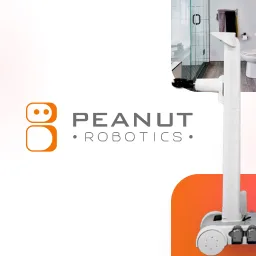
Peanut develops AI-enabled cleaning robots that autonomously navigate and monitor commercial spaces, utilizing transformer and LLM-based robotics models for enhanced efficiency. With over 13,000 hours of operational data, these robots provide a cost-effective solution to the labor-intensive cleaning challenges faced by hotels and corporate buildings.
Thya Technology offers an AI-based computer vision platform that enables users to create custom object detection models using minimal image data within hours. The platform provides access to a diverse range of unique datasets, facilitating efficient image analysis for various applications.
The startup offers a digital transformation platform that utilizes AI and computer vision to extract data from documents and automate workflows, creating digital twins of real-world systems. This technology enables clients in finance, education, and manufacturing to enhance operational efficiency and make informed decisions based on accurate data representation.
Expand Power develops a transformer designed to enhance urban electrification and strengthen electrical grids. This technology addresses the challenges of inadequate power distribution and reliability in densely populated areas, enabling more efficient energy delivery.
The startup specializes in machine learning and computer vision technologies to automate industrial production processes, enabling manufacturers to achieve their digitization and AI transformation goals. By enhancing operational efficiency, the company addresses the challenges of social mobility and economic resiliency in the manufacturing sector.
The startup develops AI vision systems utilizing quantum tunneling technology to create ultra-high performance photodetectors capable of capturing image data in real-time and low-light conditions without distortion. This technology enables global device manufacturers to implement unique applications that enhance user experiences in environments where traditional imaging solutions fail.
The startup develops AI computer vision technology that automates tagging, object detection, and metadata generation for visual content. This enables businesses to efficiently manage large volumes of images, transforming them into actionable information and improving operational workflows.
NeuroVision AI Tech offers an artificial vision platform that enables applications to recognize, track, and categorize objects and people in real-time. Their API allows developers to integrate advanced computer vision into their products, while specialized applications provide enhanced accessibility and safety for smart vehicles and visually impaired individuals.
Oculi develops Software-Defined Vision Sensors to enhance AI-driven applications at the edge. Their IntelliPixel technology optimizes efficiency and maintains data privacy for commercial and defense markets. This approach delivers high-performance Vision AI with low power consumption and reduced cost.
This company develops computer vision and machine learning technologies, creating tailored applications for various industries. They leverage research to build and deploy custom AI solutions.
The startup develops computer vision software that utilizes data extraction, face recognition, and image processing to enhance e-KYC, insurance services, and access management for small and medium enterprises and fintech companies. By automating these processes, the software enables businesses to improve operational efficiency and increase profitability.
The startup develops artificial intelligence-powered vision technology that enables manufacturing teams to create custom vision applications without requiring machine learning expertise. This software enhances quality control processes by providing an end-to-end solution for managing product quality and reducing defects.
GateIn AI provides an AI‑driven container tracking platform that uses high‑resolution OCR and transformer‑based vision models on edge devices to automatically capture gate‑in, gate‑out, and yard movements. The solution delivers near‑real‑time, ~99 % accurate inventory updates and integrates with existing terminal operating systems via standard APIs, reducing manual entry and labor costs for small‑to‑medium ports.
From Your Eyes provides an API for real-time image and video processing powered by a proprietary Large Vision Model trained on extensive visual data. This platform enables developers to integrate advanced computer vision capabilities like object detection, video analysis, and OCR into their applications. The technology is designed to operate closely to human perception, making artificial vision solutions accessible for smart technologies and end-users.
This startup provides a platform that transforms a JSON specification of desired computer vision model behavior into a live model endpoint within seconds. It automatically updates the model in response to specified edge cases, ensuring continuous accuracy and reducing the need for manual retraining.
Mobile Vision Technology provides end‑to‑end machine‑vision systems that combine commercial mobile cameras with on‑edge AI for low‑latency inspection and robot guidance. Its no‑code platform lets users configure and deploy vision workflows on‑site or in the cloud, and the all‑in‑one hardware bundle includes cameras, software and support. The solution costs up to 90 % less than traditional industrial vision setups and is sold via hardware, subscription software, and consulting services.
This company provides a vision-based framework that enables touchless control of any screen using hand gestures. Their technology allows brands to create immersive, gesture-controlled activations and helps exhibitors increase engagement and gather data insights. Restaurants can utilize this system to offer interactive, front-facing screens that attract customers through simple, touch-free interaction.
CloudEdge provides a cloud-based solution for computer vision applications, utilizing deep learning algorithms to enhance image recognition and processing capabilities. The platform enables businesses to improve operational efficiency by automating visual data analysis, reducing manual intervention and error rates.
Quasara provides a vectorization engine that transforms complex visual data from images and videos into high-dimensional vector embeddings, enabling seamless integration with existing AI applications. This technology addresses the challenges of data ingestion and quality control, allowing enterprises to efficiently build applications for real-time analytics and data exploration without the need for extensive infrastructure setup.
Transformative Optics develops ai-CMOS image sensor technology that enhances image clarity and color accuracy through multi-sensor arrays and neural-net processing. Their systems capture high-definition visual data across various lighting conditions, addressing the need for precision imaging in industries such as security, defense, and entertainment.
Emmetra provides AI-based development tools that enhance camera performance by optimizing imaging algorithms and workflows. The startup enables camera OEMs and ODMs to streamline product development, reducing skill barriers and allowing them to focus on customer-centric solutions.
The startup develops IoT devices that utilize imaging technologies for three-dimensional mapping, incorporating advanced image sensors and compact modules for color grading and depth mapping. Their products address the challenges of high computational demands and bulky form factors in current imaging solutions, enabling more efficient and streamlined operations for businesses.
The startup develops metasurface lenses that utilize meta-optics and advanced reconstruction software to create compact, wide-field tunable focal length optics. This technology enables precise optical data transformation for digital processing, providing customers with clear focus on objects without loss of field.
VisionNest develops AI-powered computer vision technology that transforms raw video footage into actionable insights by utilizing Vision Language Models to detect specific behaviors and events in real-time. This solution addresses the need for effective monitoring in industries such as retail, healthcare, and manufacturing, enabling compliance checks, anomaly detection, and improved operational efficiency.