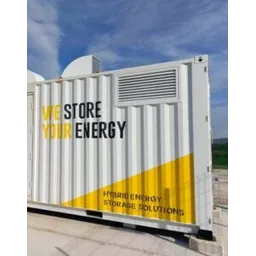
Volfpack Energy manufactures graphene-based supercapacitors that offer enhanced energy storage capabilities. Their supercapacitors provide a higher capacity at a lower cost compared to traditional energy storage solutions.
Find Investable Startups and Competitors
Search thousands of startups using natural language—just describe what you're looking for
Supercapacitor Startups
50 companies matched by StartupSeeker’s semantic search. Average reported funding: $10.1M.
Snapshot from
NOVAC produces solid‑state, lithium‑free supercapacitor pouch cells that can be molded into or bonded with structural composites. The devices deliver high power density, ultra‑fast recharge, >95 % efficiency, operate from –40 °C to 120 °C and exceed one million charge‑discharge cycles, with customizable voltage and capacitance. They serve automotive, aerospace, marine, robotics and industrial OEMs needing compact, high‑power energy storage.
Pi POP offers a battery-free electric bicycle that uses supercapacitor technology to store and regenerate kinetic energy. This system provides autonomous rider assistance without the need for external charging, offering unlimited range and a low-maintenance mobility solution.
2D Nano produces high‑quality graphene via continuous‑flow synthesis with real‑time monitoring and integrates it into cement composites to create structural supercapacitors. The resulting graphene‑cement materials offer ultra‑fast charging, temperature resilience, and low‑carbon manufacturing for construction material makers and large‑scale energy storage integrators.
Wright Energy Storage Technologies develops electrostatic supercapacitor technology as an alternative to traditional chemical batteries. Their solutions offer high-efficiency energy storage characterized by ultra-fast charging capabilities. This technology provides a safer energy storage option, mitigating risks like thermal runaway associated with lithium-ion alternatives.
Wright Energy Storage Technologies develops electrostatic supercapacitor energy storage solutions that outperform traditional chemical batteries. These devices offer high-efficiency energy storage with ultra-fast charging capabilities. The technology provides a safer alternative by eliminating the risk of thermal runaway associated with lithium-ion systems.
GODI manufactures high-energy lithium-ion and sodium-ion batteries, as well as supercapacitors, utilizing environmentally friendly electrode processes and advanced cell chemistries to enhance energy density and cycle life. The company addresses the need for sustainable energy storage solutions in electric vehicles and renewable energy systems while promoting a zero-carbon footprint through innovative recycling practices.
Atomiver manufactures SC-GN3, a high-energy nitrogen-doped graphene material designed for active electrodes in energy storage devices. This material offers superior gravimetric and volumetric capacitance, enabling high energy and power density in supercapacitors. The graphene is utilized across various sectors, including aerospace, defense, sensors, and renewable energy systems.
Ohm develops a lightweight car battery utilizing EDLC supercapacitors and Lithium Iron Phosphate chemistry, providing reliable cold weather performance and a lifespan exceeding seven years. This battery prevents accidental drainage and eliminates the need for jump-starts, addressing the common issue of dead batteries in extreme conditions.
Carbon-Ion Energy develops electrostatic energy storage devices that enable ultra-fast charging and power-on-demand solutions, significantly enhancing the performance of existing lithium-ion batteries and supercapacitors. Their C-Ion cells offer high energy density, rapid charge/discharge capabilities, and over 100,000 cycles, addressing the need for efficient and safe energy storage in electric vehicles and grid applications.
The startup has developed a second-life battery cell platform that employs patented technology to measure, select, and balance both new and used battery cells at an industrial scale. This platform provides industrial customers with a sustainable and cost-effective solution for their battery requirements, addressing the need for reliable and long-lasting battery products.
Graph Energy provides hybrid energy storage systems that combine traditional batteries with polar ultracapacitor modules. The integrated controller optimizes charge‑discharge cycles to deliver rapid power response for renewable sites, data‑center UPS, telecom, and generator applications, improving efficiency and reducing fuel consumption. The modular solution includes remote monitoring and supports standard communication protocols for seamless integration.
Carbon Ion energy develops electrostatic energy storage devices that enable ultra Fast charging and power On Demand solutions, significantly enhancing the performance of existing lithium Ion batteries and supercapacitors
Carbon-Ion develops advanced carbon-ion battery technology for electric vehicles, offering faster charging times and increased energy density compared to traditional lithium-ion batteries. Their batteries aim to improve EV performance and range, accelerating the transition to sustainable transportation.
ELOHIM designs and manufactures silicon capacitors that provide high capacitance, low impedance, and superior thermal stability, making them suitable for high-performance applications in the semiconductor and automotive industries. These capacitors serve as an effective alternative to traditional MLCCs, addressing issues of voltage derating and power noise in compact electronic systems.
Cancrie produces nanocarbon materials from organic waste, specifically coconut shells, to enhance the performance of batteries and capacitors. Their technology increases cycle life by nearly 100% and improves energy efficiency by 12-15%, addressing the need for sustainable and efficient energy storage solutions.
This startup develops energy storage products with ultra-fast charging and enhanced thermal efficiency, integrating built-in software and AI features for impact resilience. These products enable military automotive and aerospace industries to achieve faster charging speeds, improved portability, and greater safety and security for electric mobility.
Planckian develops quantum batteries designed to enhance the energy storage capabilities of next-generation quantum computers. By utilizing superconducting materials, these batteries address the limitations of traditional energy sources, enabling more efficient and scalable quantum computing architectures.
Spinor Energy develops scalable, efficient superconducting battery systems designed specifically for hyperscale AI datacenters. These batteries smooth rapid power fluctuations inherent in GPU training loads by storing excess energy and dispatching it near instantly with low loss. The technology provides grid-friendly load management, minimizing energy waste and interconnection delays for high-demand computing facilities.
Super Sodium New Energy specializes in the research, development, and manufacturing of sodium-ion battery materials, focusing on low-cost, long-life, and high-energy density solutions. Their products cater to applications in electric vehicles, energy storage, and national security, addressing the need for safer and more sustainable energy storage alternatives.
The startup develops energy storage systems utilizing sawdust converted into battery-grade carbon, eliminating the need for cobalt, nickel, and graphite. Their high-power lithium fluorophosphate technology offers fast charging, enhanced safety, and extended cycle life, reducing the frequency of battery replacements for clients.
The startup specializes in 3D carbon nanotube technology, utilizing a three-dimensional carbon nano sponge to enhance battery performance. This technology addresses the limitations of energy density and charge cycles in conventional batteries, providing a more efficient and durable energy storage solution.
BTRY develops ultra-thin solid-state batteries designed for high power density and extreme temperature operation. Their technology enables lightweight and flexible energy solutions for IoT devices, MedTech, and consumer electronics. The company utilizes scalable semiconductor equipment for cost-effective, streamlined battery production.
Unbound Potential develops a membrane‑free flow battery that stores energy in liquid tanks, decoupling power and capacity for unlimited scaling. The design uses two immiscible, non‑flammable electrolytes and minimal hardware, delivering low‑cost, safe, long‑duration storage with up to 85% round‑trip efficiency and over 20,000 cycles. It targets industrial solar, off‑grid sites, grid services, EV fleet depots, and data centers seeking scalable, sustainable energy storage.
PowerX develops energy storage systems, including the PowerXCube with built-in power conversion systems, and ultrafast EV charging solutions like the PowerXHypercharger, utilizing renewable energy sources. The company addresses the need for efficient energy storage and rapid EV charging infrastructure to support the growing demand for electric vehicles and sustainable energy solutions.
The startup develops customized storage battery solutions, including battery cells, packs, and management systems, tailored for industries such as automotive, semiconductors, and aerospace. By leveraging advanced research and development, the company provides efficient power models that meet the specific energy storage needs of its clients.
Develops lithium-sulfur batteries that provide twice the energy density of conventional lithium-ion batteries, using advanced sulfur-based cathode materials and proprietary electrolyte formulations. These long-life batteries address the limitations of current energy storage technologies, offering higher capacity and improved performance for applications in electric vehicles, renewable energy, and portable electronics.
Suzhou Xizhi Technology specializes in the development of advanced materials and power electronics for applications in energy storage and conversion systems. The company focuses on enhancing the efficiency and performance of electronic devices, addressing the need for more reliable and sustainable energy solutions.
The startup develops polymorphic thin lithium batteries utilizing flame-retardant polymer solid electrolytes and large-capacity anode technology to enhance energy density for electric vehicles and IoT devices. Their batteries provide a safer and more efficient energy solution, addressing the limitations of traditional lithium-ion batteries in terms of performance and safety.
10DQ develops and provides long-duration energy storage solutions designed for safety and affordability. Their technology focuses on enabling extended energy retention capabilities for grid applications. This offering supports reliable power infrastructure through enhanced storage duration.
This startup manufactures metallic mats designed for energy applications, offering high-surface-area electrodes for electrolyzers, current collectors in batteries, and substrates for heterogeneous catalysis. These metallic mats enhance the performance and sustainability of electrochemical processes for next-generation energy storage and conversion.
Anthro Energy develops the Proteus electrolyte platform to enhance battery performance, safety, and energy density. This technology is a drop-in solution compatible with existing giga-factory infrastructure, enabling next-generation chemistries like Silicon anodes. The company provides advanced electrolyte solutions and structural battery cells for consumer electronics, micromobility, defense, and automotive applications.
The startup develops high-temperature superconducting (HTS) tape technology that generates strong magnetic fields necessary for plasma confinement in magnetic fusion reactors. This technology enables the production of clean and sustainable electric energy by facilitating efficient fusion processes at elevated temperatures.
Injectpower develops ultra-miniaturized, high-energy-density micro-batteries that are rechargeable and designed for enhanced safety and reliability. These micro-batteries provide compact and efficient energy storage solutions for portable electronic devices and IoT applications, addressing the limitations of traditional battery sizes and performance.
ADS-TEC Energy develops battery storage-based platform solutions that integrate advanced software to enable ultra-fast charging of electric vehicles and optimize energy consumption for industrial applications. Their technology addresses high power demand fees and enhances grid stability, ensuring reliable performance for up to 10 years through a digital twin of battery modules.
Salgenx provides modular, containerized saltwater flow batteries that deliver 3–6 MWh of grid‑scale electricity storage using low‑cost zinc electrodes. The system can also store thermal energy and uses AI‑driven control to switch between electricity, thermal, or revenue‑optimizing modes, offering utilities and large energy users a flexible, cost‑effective storage solution.
This startup develops advanced energy storage solutions for large-scale applications, improving grid stability and reliability. Their technology enables efficient storage and dispatch of renewable energy sources, facilitating a transition to a cleaner energy future.
florrent engineers bio-based supercapacitors that significantly increase energy density over traditional storage technologies. This advancement enables cost-effective solutions for short-duration Power Quality and Reliability challenges in electrical infrastructure. The resulting systems offer a smaller footprint and competitive pricing for applications like data center backup and grid modernization.
Adaptive develops a kinetic energy storage system that utilizes a high-tech hollow cylinder made from carbon material, achieving over 92% efficiency and a lifespan of 24 years. This system provides scalable electrical power up to 350 kW, enabling the integration of renewable energy sources and stabilizing power grids without the need for infrastructure upgrades.
TAE Power Solutions develops modular energy storage and power delivery systems that enable electric vehicles to charge twice as fast and extend their range by 10-15% compared to conventional battery-electric powertrains. Their technology also optimizes stationary energy storage, reducing the levelized cost of storage while maximizing the efficiency of renewable energy utilization.
Amber Kinetics designs and manufactures long-duration flywheel energy storage systems (FESS) that extend energy storage duration from minutes to hours, providing a safe and efficient alternative to traditional battery systems. Their technology enables applications such as load shifting and frequency regulation, while significantly reducing CO2 emissions when charged with renewable energy sources.
Geyser Batteries develops high-power energy storage solutions using a proprietary water-based electrolyte, designed for heavy-duty applications. Their technology addresses the need for safe and sustainable battery options in industries reliant on reliable energy sources.
The startup manufactures electrolyte solutions for energy storage technologies, specializing in lithium-ion batteries, sodium-ion batteries, and supercapacitors. Their products enable clients to meet specific energy storage requirements while enhancing performance and efficiency in various applications.
TeraWatt Technology manufactures lithium-ion batteries with ultra-high energy density, designed to be lighter, smaller, and safer for large-scale applications. Their technology addresses the need for more efficient energy storage solutions in the transition to sustainable electrification.
HESS Ltd. develops hybrid energy storage solutions that integrate modular products and advanced technologies to enhance grid stability and optimize energy management. Their systems provide controllable inertia, voltage control, and multi-service operations, addressing the need for efficient energy storage in transmission, distribution, and renewable integration.
The startup develops eco-friendly battery technology that utilizes nano-particle silicon in the anode to enhance energy density and charging speed while reducing costs. Their batteries, made from biomaterials and recycled plastics, are designed for unmanned aerial vehicles and electric vehicles, addressing the need for sustainable energy storage solutions.
Revterra develops flywheel energy storage systems that utilize a spinning rotor and passive magnetic levitation to convert and store kinetic energy, providing a high-efficiency solution for grid stabilization. Their technology addresses the declining stability of power grids as renewable energy sources increase, offering instant response times and a lifespan of over 20 years with minimal maintenance.
Levistor is developing a laminated flywheel energy storage system that provides rapid bursts of high-energy output for electric vehicle charging. This technology addresses the limitations of traditional grid infrastructure by enabling super-fast charging without the need for costly upgrades.
The startup develops moldable all-solid-state supercapacitors that enhance the performance and efficiency of electric vehicles by enabling rapid charging and discharging. Their technology allows electric manufacturing companies to integrate high-performance energy storage cells into composite structures, improving overall energy management and vehicle performance.
Ampcera develops solid-state electrolyte materials that provide high ionic conductivity and superior purity, enabling fast charging and enhanced energy density for electric vehicles and consumer electronics. Their technology addresses the limitations of traditional lithium-ion batteries by offering safer, longer-lasting, and lightweight alternatives suitable for various applications, including defense and aerospace.