Blue Capsule Technology develops small modular reactors that produce up to 150 MWth of industrial-grade heat, steam, and electricity, utilizing TRISO fuel in a sodium-cooled system. This technology provides a low-carbon alternative to fossil fuels for industries like ammonia and soda ash production, enabling them to decarbonize while maintaining operational efficiency.
Find Investable Startups and Competitors
Search thousands of startups using natural language—just describe what you're looking for
Small Modular Reactor Startups
50 companies matched by StartupSeeker’s semantic search. Average reported funding: $87.9M.
Snapshot from
Blykalla develops the Swedish Advanced Lead Reactor (SEALER), a 55 MW lead‑cooled small modular reactor that provides clean, dispatchable baseload power in a compact 5 × 5 m factory‑produced unit. Its low‑pressure, lead‑coolant system offers passive, walk‑away safety and corrosion‑resistant materials, enabling rapid, modular deployment for utilities and industrial users needing reliable electricity, high‑temperature heat, hydrogen, or desalination capacity.
NuScale Power has developed a small modular reactor (SMR) designed for efficient electrical generation and thermal applications. This technology provides a scalable and reliable energy solution to meet the growing demand for low-carbon power sources.
Ampera Clean Energy builds compact thorium‑fueled microreactors that generate 15–30 MWe of electricity in a modular, source‑assisted design. The reactors provide intrinsic safety, low long‑lived waste, and minimal refueling, enabling rapid deployment for utilities, remote industrial sites, maritime vessels, and other off‑grid applications.
Rolls-Royce SMR designs factory-built small modular reactors (SMRs) that provide a scalable and cost-effective solution for generating clean nuclear energy. This technology addresses the urgent global demand for reliable, low-carbon power sources while minimizing construction risks and timelines.
Terrestrial Energy develops the Integral Molten Salt Reactor (IMSR), a small modular nuclear reactor that uses a molten‑salt coolant to deliver high‑temperature, carbon‑free heat and electricity.
This advanced technology company develops and commercializes portable and stationary microreactor technologies, including the KRONOS MMR and LOKI MMR systems. The company is vertically integrated, also focusing on nuclear fuel fabrication, HALEU transportation, and nuclear applications for space power systems. They provide modular, on-demand clean energy solutions for terrestrial and extraterrestrial needs.
Last Energy develops micro modular nuclear power plants using a factory-produced, fully modular design to provide reliable baseload power for industrial customers and utilities. Their delivery model minimizes upfront capital costs and land requirements, enabling efficient energy production while addressing the need for decarbonized energy solutions.
Radiant develops the Kaleidos, a portable nuclear microreactor that generates 1.2 MW of electricity and 1.9 MW of thermal power, providing a clean alternative to diesel generators in remote locations. This technology eliminates the need for on-site water use and nuclear waste, enabling rapid deployment and continuous power supply for critical infrastructure such as hospitals and military installations.
Aalo manufactures compact nuclear reactors that utilize liquid metal coolant and UZrH fuel to achieve high energy density and simplified safety systems. These reactors can generate electricity at a target cost of 3¢ per kWh, providing a scalable solution for energy needs ranging from small data centers to large cities.
Steady Energy designs, builds, and operates compact low‑temperature, low‑pressure nuclear reactors (the LDR‑50) that deliver up to 50 MW of zero‑carbon heat per module directly to district‑heating networks.
Develops kilowatt-scale micro-fission reactors using HALEU TRISO fuel and sodium heat pipes to provide autonomous, passively safe, and highly reliable power for mission-critical facilities and space applications. These reactors operate continuously for over three years without a sustaining supply chain, minimizing maintenance and enabling deployment in remote or resource-limited environments.
Avalanche Energy develops compact micro-fusion reactors that provide carbon-neutral power for distributed energy and mobility applications. These reactors can be rapidly manufactured and deployed, delivering continuous energy for up to three years, addressing the need for sustainable power in remote locations.
The startup manufactures microreactors that generate electricity from radioactive waste and thorium through molten salt reactions with plutonium and uranium. This technology provides a sustainable energy solution, enabling industries to utilize mining by-products while contributing to carbon neutrality goals.
Jimmy designs and operates thermal generators powered by nuclear micro-reactors to provide carbon-free industrial heat at a lower cost than fossil fuels. This technology enables industrial clients to utilize decarbonized heat for their processes without significant modifications to their existing systems.
Astral Systems builds compact lattice‑confinement fusion reactors that generate over 1 trillion D‑T fusions per second in a containerized chassis. The reactors provide on‑site production of medical isotopes for hospitals and a high‑flux, tunable neutron source for research labs, with automated safety interlocks and API‑driven data integration.
Realta Fusion develops compact, scalable, and modular fusion energy systems based on magnetic mirror technology. These CoSMo fusion™ systems are designed to provide zero-carbon, cost-effective energy solutions for industrial heat and power applications. The modular design allows for faster implementation and scalability to meet diverse energy demands.
Maritime Fusion is developing compact HTS‑tokamak fusion reactors that generate zero‑emission electricity for marine vessels, defense platforms, and remote off‑grid installations. By targeting power levels an order of magnitude lower than grid‑scale plants, the reactors avoid the most demanding heat‑flux and material challenges while delivering breakeven fusion (Q > 1) without long‑lived radioactive waste or melt‑down risk.
nT-Tao is developing a compact fusion reactor utilizing a Dynamic Stabilized Torus to generate 10-20 MW of electricity, providing a scalable and rapid deployment energy solution. This technology addresses the need for clean, reliable, and independent energy sources for various applications, including industrial facilities and remote locations.
Project Omega is rebuilding the U.S. nuclear fuel cycle end‑to‑end to restore domestic energy sovereignty. By developing modern recycling, safeguards, and scalable fuel pathways, the company aims to enable small‑scale, long‑duration nuclear power systems that can meet growing national energy demand.
Acceleron Fusion is developing muon-catalyzed fusion technology to create small, efficient power plants that operate at significantly lower temperatures than traditional fusion methods. This approach aims to provide a reliable source of clean energy, addressing the urgent need for sustainable solutions to combat climate change and enhance energy security.
HEXANA offers an integrated energy system combining modular sodium-cooled fast reactors with thermal energy storage. This provides heavy industries with a firm, low-carbon source of high-temperature heat and dispatchable power, enabling decarbonization of hard-to-abate sectors.
Pacific Fusion is developing a modular pulsed magnetic inertial fusion system that generates more fusion energy output than the energy input, utilizing a fast electric pulser and small fusion chambers. This technology aims to provide affordable, reliable fusion power to meet the growing global energy demand and combat climate change.
NearStar Fusion is developing a modular Magnetized Target Impact Fusion (MTIF) technology that enables the rapid integration of clean fusion energy into existing power grids and microgrid infrastructures. This approach addresses the need for a reliable, tritium-free energy source that can retrofit traditional hydrocarbon power plants, delivering limitless and always-on energy to cities and industries worldwide.
Newcleo develops lead-cooled fast reactors and MOX fuel manufacturing to generate safe and sustainable nuclear energy while closing the fuel cycle. The company addresses the urgent need for low-carbon energy solutions to combat climate change and facilitate global decarbonization efforts.
Zap Energy is developing compact fusion power technology that eliminates the need for magnets or lasers, utilizing a novel approach to achieve nuclear fusion. This innovation aims to provide a cleaner and more efficient energy source, addressing the challenges of traditional fusion methods and their associated costs.
Elementl Power is an end‑to‑end developer of utility‑scale nuclear projects that de‑risks and accelerates the delivery of next‑generation reactors by remaining technology‑agnostic and handling site selection, licensing, financing, and construction. Its capital‑efficient build‑transfer and joint‑development models let utilities and large energy consumers secure long‑term, low‑carbon baseload power with reduced balance‑sheet exposure. The company aims to add over 100 GW of new nuclear capacity in the United States by 2050.
Cambridge Atomworks builds the ODIN micro‑reactor, a compact molten‑salt‑cooled nuclear system that delivers continuous, low‑emission electricity to off‑grid sites without needing water or extensive infrastructure. The transportable unit integrates solid‑fuel fission, power conversion and passive cooling, providing reliable power for remote mining, industrial operations and isolated communities for years with minimal maintenance.
OmniBRx Biotechnologies manufactures single-use bioreactors utilizing dynamic-bed reactor (DBR) technology, designed for high-cell density cultures in biologics production and stem cell therapies. Their systems enhance nutrient homogeneity and reduce operational costs, enabling efficient scaling from 0.5L to 200L while meeting stringent regulatory compliance standards.
LIS Technologies develops patented laser isotope separation technology to efficiently enrich uranium for both Low-Enriched Uranium (LEU) used in existing nuclear reactors and High-Assay Low-Enriched Uranium (HALEU) for next-generation Small Modular Reactors (SMRs). This technology offers a scalable and cost-effective alternative to traditional enrichment methods, addressing the need for more efficient uranium processing in the nuclear energy sector.
ApolloTomics is building a compact pressurized water reactor platform that delivers high‑density, low‑carbon baseload power in a footprint an order of magnitude smaller than conventional nuclear plants. By using commercially available fuel, proven materials, and passive safety systems, the design follows an accelerated regulatory path and modular construction to lower capital costs and achieve electricity prices around 3 ¢/kWh for utilities, industrial users, and microgrid developers.
Develops micro modular reactors (MMRs) that generate 1-2 MW of electrical power and 5-22 MW of thermal power, using high-assay low-enriched uranium (HALEU) fuel and a ceramic core for improved safety and efficiency. These compact, transportable reactors can be deployed in remote locations, industrial sites, or space missions, providing scalable and reliable energy solutions with reduced costs and deployment times compared to traditional nuclear systems.
The Canadian Strategic Missions Corporation develops dual-use technologies for space and defense applications. Its subsidiaries focus on deploying safe, portable micro-nuclear reactors for remote power and advancing deep-tech R&D in quantum and natural resources. The company delivers new capabilities for both terrestrial and extraterrestrial challenges.
The startup develops molten salt reactor technology to provide a clean energy source while producing medical isotopes for critical healthcare applications. This technology addresses the need for sustainable energy solutions and reliable medical isotope supply in a world increasingly focused on environmental responsibility.
Develops a small modular nuclear reactor, the FLEX reactor, that uses standard materials and no moving parts to generate high-temperature heat for dispatchable electricity, hydrogen production, and industrial processes. This system provides a reliable, low-cost alternative to fossil fuels, supporting decarbonization efforts by complementing renewable energy sources when they are unavailable.
Tam Fortis Solutions provides a first‑of‑its‑kind portable micro‑reactor that delivers continuous 40 kWe of clean, zero‑emission power for up to five years without refueling.
The startup develops modular nuclear reactor technology to provide a reliable and sustainable energy supply while reducing reliance on oil shale for electricity generation. This technology enables organizations to access electricity at competitive rates, supporting both energy security and climate objectives.
Saltfoss Energy develops modular, floating nuclear power plants utilizing Compact Molten Salt Reactor (CMSR) technology. These barges provide scalable, low-carbon electricity, desalinated water, and heat for industrial processes, offering a safe and cost-effective energy solution.
Liberty Fusion develops compact fusion reactors that fuse hydrogen atoms at 100 million degrees to generate clean, abundant energy.
Kärnfull Energi is the first nuclear electricity provider in the Nordic regions, focusing on funding research and development for next-generation nuclear technology, including small modular reactors (SMRs) and advanced fuel cycles. The company aims to deliver a reliable, low-carbon energy source to meet the increasing demand for sustainable electricity while enhancing energy security.
Nuclear Turbines develops compact nuclear reactors that directly heat compressed air for commercial gas turbines, delivering low‑cost electricity in markets where power prices limit growth. By integrating mature turbine technology with a modular reactor design, the system reduces size, complexity, and overall cost, enabling more affordable nuclear power generation.
Seaborg develops the Compact Molten Salt Reactor, a small modular reactor utilizing molten fluoride salt for efficient nuclear fission. This technology provides a safer and more sustainable energy source, addressing the need for low-carbon power generation.
This startup builds and operates small nuclear power plants on-site to provide firm, zero-carbon energy. They integrate nuclear technology and the supply chain to produce clean power, process heat, hydrogen, and other clean energy products.
Aronnax designs compact nuclear reactors for maritime freight vessels, providing clean, reliable power that reduces CO₂ emissions and improves energy autonomy. Their onboard reactors feature passive safety and a 60‑year operational lifetime, delivering a lower total cost of ownership and redundant propulsion for enhanced safety at sea.
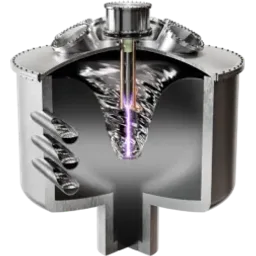
Carbon Vanish operates a continuous‑flow reactor that mixes ambient air with finely milled olivine, converting CO₂ into stable carbonate minerals within seconds. The modular system requires no high‑pressure equipment or external energy, enabling permanent sequestration and the production of inert chalk that can be stored geologically or applied as a soil amendment. It targets heavy‑emitting industries and large‑scale climate projects seeking cost‑effective, verifiable carbon removal.
Copenhagen Atomics mass-manufactures thorium-based molten salt reactors to provide nuclear energy as a service. Their proprietary "Onion Core®" design enables efficient production and deployment of compact, containerized reactor units that deliver reliable, clean heat at a predictable annual fee.
This startup develops electrothermal technology for sustainable chemical manufacturing, specifically an electrified pyrolysis reactor that converts waste plastic into valuable fuels. Their process enables chemical manufacturers to improve efficiency and environmental sustainability by utilizing waste streams.
Deep Atomic develops and integrates Small Modular Reactors (SMRs) to provide reliable, zero-carbon baseload power for AI infrastructure and data centers. The company bridges the gap between SMR vendors and data center developers by offering feasibility studies, integration planning, and proprietary Balance of Plant (BOP) architecture. This expertise accelerates the deployment of nuclear energy solutions tailored to the high-density power demands of modern AI workloads.
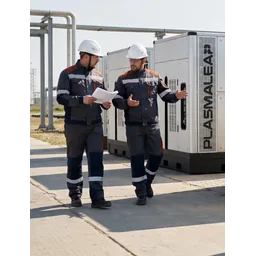
PlasmaLeap builds non‑thermal plasma reactors that directly synthesize ammonia, hydrocarbon e‑fuels, and green nitrogen fertilizer with higher energy efficiency than traditional catalytic or electrochemical methods. Their eNFix units enable on‑farm, on‑demand production of cost‑competitive fertilizer, while modular reactor designs support industrial scale and custom R&D applications for low‑carbon chemical synthesis.
Coflux Purification has developed a compact in-stream reactor that utilizes a catalytic absorbent and UV light to break down PFAS in wastewater, eliminating the need for hazardous waste disposal. This technology provides industrial operators with a scalable and economical solution to effectively remove forever chemicals from their water systems.