The startup develops satellite-enabled telecommunication technology that integrates seamlessly into existing networks, allowing businesses to scale data connectivity across diverse geographies. This technology provides continuous connectivity, reducing operational costs and ensuring reliable access to communication services.
Find Investable Startups and Competitors
Search thousands of startups using natural language—just describe what you're looking for
Satellite Internet Startups
50 companies matched by StartupSeeker’s semantic search. Average reported funding: $317.4M.
Snapshot from
Constellation Technologies deploys a constellation of telecom satellites to provide high-speed, low-latency internet connectivity in areas lacking terrestrial infrastructure. This service enables telecom operators to deliver affordable broadband solutions to residential, enterprise, and transportation sectors globally.
Kuiper Government Solutions operates a broadband satellite internet constellation to deliver high-speed internet connectivity to underserved regions. This technology addresses the lack of reliable internet access, enabling users to connect to essential online services and resources.
Astranis designs and manufactures small, radiation-hardened telecommunications satellites for geostationary orbit, utilizing advanced digital processing technology to enhance internet access in remote regions. By reducing the number of satellites needed for constant service, Astranis lowers operational costs and simplifies user terminal requirements, making connectivity more affordable for underserved areas.
Sateliot operates a satellite telecom network that provides global IoT connectivity using a Low Earth Orbit (LEO) satellite constellation compliant with the 5G protocol. This service enables continuous remote connectivity for IoT devices, addressing the challenge of reliable communication in areas lacking traditional network infrastructure.
The startup develops millimeter-wave wireless products that provide Gigabit-speed point-to-multipoint backhaul solutions for fifth-generation and rural broadband networks. Their software-driven radio technology enables low earth orbit satellite internet providers to offer cost-effective user and mobile terminals, significantly lowering capital expenditures.
Connected provides a low-power, low-bandwidth global connectivity network via satellite, enabling seamless communication for millions of IoT devices in remote areas lacking cellular coverage. The platform offers standardized connectivity solutions that significantly reduce setup and operational costs, facilitating various applications from precision agriculture to emergency support.
E-Space provides a sustainable low Earth orbit (LEO) satellite communication platform that connects billions of IoT devices globally, enabling real-time data transmission without reliance on commercial traffic. This system addresses the need for affordable, resilient connectivity in high debris environments, significantly reducing costs by over 90% compared to traditional LEO networks.
Hedron operates a network of data satellites that facilitate real-time data transmission between space and Earth. This technology addresses the challenge of limited connectivity for remote and underserved areas, enabling enhanced communication and data access globally.
Develops a hybrid RF and optical satellite network that acts as an Internet exchange point in low Earth orbit, enabling real-time space-to-space data relay. This system addresses the downlink bottleneck faced by industries like defense, Earth observation, and space sustainability by providing high-bandwidth, secure, and flexible communication solutions for on-orbit missions.
Develops flat panel antennas with active electronically scanned arrays (AESAs) that enable satellite user terminals to track moving satellites and users, reducing size, weight, power, and cost (SWaP-C). This technology expands satellite internet accessibility, addressing the challenge that only 12% of its potential is currently utilized due to the high cost of existing terminals.
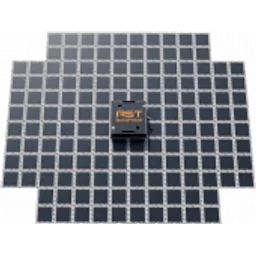
AST SpaceMobile is developing a space-based broadband cellular network that provides uninterrupted coverage for unmodified mobile devices globally. The company aims to eliminate connectivity gaps, making reliable mobile internet accessible to underserved areas.
QOSMIC provides optical satellite communication systems that replace traditional RF links with laser‑based connections, delivering multi‑Gbps data rates and lower latency. Their end‑to‑end platform includes space‑qualified laser terminals, adaptive ground‑station optics, and network software to offer secure, high‑capacity connectivity for telecom operators, enterprises, and government agencies.
The startup provides a multi-beam phased array ground station-as-a-service that utilizes a fully software-defined antenna system to deliver low latency and high throughput satellite communications. This technology enables satellite owners and operators to achieve cost-effective ground station services with enhanced data security and comprehensive sky coverage for improved domain awareness.
Astrocast provides global, bidirectional IoT connectivity through its low‑Earth‑orbit nanosatellite constellation, enabling remote assets such as vessels, buoys, and livestock sensors to transmit and receive data anywhere on the planet. Its compact Astronode modules use a low‑power L‑band protocol (<0.35 W peak, <500 nA sleep) with 256‑bit AES encryption, and data is accessed via a RESTful API and web portal for real‑time telemetry, OTA updates, and usage analytics.

Thorium Space designs and builds satellite telecommunications systems that utilize electronic beam steering and high-performance chipsets for efficient data transmission. The company addresses the need for faster and more reliable satellite communication in unique frequency bands, enhancing connectivity for various applications.
Lynk Global provides a patented satellite direct-to-device connectivity system that enables standard mobile phones to access mobile networks without requiring any hardware changes. This technology ensures universal coverage, allowing users in remote areas to maintain communication through existing mobile network operators.
This company provides advanced connectivity solutions by combining cellular, Wi-Fi, and satellite networks for mobile applications. Their AI-powered software orchestrates these wireless links to ensure seamless network switching and dynamic aggregation for high throughput. They offer hardware and software products designed to deliver resilient, high-speed internet access for enterprise fleets, assets, and government operations.
Skyloom is developing a spaceborne infrastructure utilizing optical communications technology to provide high-capacity data relay services for satellite-to-satellite and satellite-to-Earth transmissions. This technology addresses the limitations of current spaceborne communication by significantly increasing bandwidth and reducing latency, enabling real-time data transfer from low Earth orbit to cloud services.
Provides end-to-end satellite connectivity solutions for Low Earth Orbit (LEO) operators, utilizing hybrid ground networks of existing antennas and proprietary connectivity kits for telemetry, tracking, and control (TTC) as well as mission data downlink. Ensures data sovereignty and security through a dedicated network, streamlining satellite operations and reducing reliance on traditional ground infrastructure.
Kepler offers a hybrid RF and optical satellite network to overcome on-orbit data downlink bottlenecks. Their constellation acts as internet exchange points, providing high-bandwidth, real-time data relay for Earth observation, defense, and other space missions.
Univity provides telecom operators with a neutral, competitive space infrastructure that bridges terrestrial and satellite networks to deliver high‑speed, low‑latency connectivity worldwide.
Orbitworks develops satellite constellations to provide essential infrastructure for the emerging space economy. By enabling reliable data transmission and connectivity, the company addresses the growing demand for advanced satellite services in various industries.
Solstar Space provides internet-based communication solutions for on-orbit assets, utilizing WiFi Access Points and Space Communicators to ensure reliable connectivity for astronauts and spacecraft operators. The technology addresses the need for persistent communication during space missions, enhancing operational efficiency and safety in environments such as space stations and lunar habitats.
This startup provides broadband network connections to underserved tertiary and rural markets using advanced wireless technologies and satellite integration. By enhancing access to reliable internet services, the company addresses the digital divide faced by these communities, enabling them to connect with essential information and resources.
SpaceIn offers global IoT connectivity for remote locations using a picosatellite platform. Their SpaceANT system leverages PocketQube satellites and LoRaWAN technology to collect and transmit sensor data from low-power devices, enabling real-time monitoring for industries like agriculture and oil & gas.
MTNSat provides fully managed satellite internet and hybrid 4G/5G network solutions that combine LEO and GEO satellite links with terrestrial connectivity for remote and underserved sites. Their turnkey service includes bandwidth provisioning, antenna hosting, teleport facilities, and cybersecurity, delivering up to 99.95% uptime and low‑latency access for maritime, energy, government, and other enterprise customers.
Apogeo Space develops a constellation of picosatellites that provide IoT connectivity for billions of disconnected devices across various industries, including agriculture and environmental monitoring. This technology enables real-time data collection and tracking, addressing the challenge of limited connectivity in remote and underserved areas.
The company provides an end‑to‑end satellite network platform that delivers high‑throughput, low‑latency connectivity to remote and mobile operations. Its modular constellations use inter‑satellite laser cross‑links and adaptive routing to maintain continuous bandwidth and 99.9 % uptime, while secure APIs and ground‑station integration enable seamless backhaul to terrestrial networks. The service targets remote IoT, maritime, aviation, disaster‑response and telecom carriers needing reliable satellite backhaul.
ENWAVE builds a low‑Earth‑orbit relay constellation that gives satellites continuous, API‑driven connectivity, eliminating the need for scheduled ground‑station passes. By integrating a relay module or existing radio, spacecraft automatically link to the nearest ENWAVE node, providing near‑100% daily contact and simplifying data downlink for LEO operators.
The startup operates a cloud-based ground station service that enables automatic acquisition and tracking of low Earth orbit satellites using a unified antenna specification and software-defined radio technology. This offering provides clients with a scalable infrastructure for reliable space-to-earth communication, addressing the need for accessible satellite connectivity in the expanding NewSpace ecosystem.
Satlyt builds a decentralized space computing platform that interconnects satellites into a unified edge computing network. This platform allows satellite operators to monetize their excess compute capacity through a dedicated marketplace. Developers can utilize APIs to build custom applications leveraging distributed processing directly on orbiting assets.
Beamlink provides satellite-based Internet access specifically designed for individuals in disaster zones and remote areas where traditional connectivity is absent. This service facilitates reliable communication and access to critical resources during emergencies, ensuring users remain connected when it matters most.
Satlabs operates a global data‑relay satellite network that delivers continuous 24 × 7 connectivity to space assets. Customers can onboard satellites using a user‑friendly link designer and retrieve real‑time telemetry through a single API call from any location, without needing proprietary transponders.
Ephemeris Net builds the foundational networking infrastructure needed for a space‑based internet, moving beyond simple bent‑pipe links. By defining how data is routed and transmitted through orbit, the company enables reliable, high‑capacity connectivity for satellites and other space assets, supporting the next generation of space‑internet services.
NovaLink provides high‑bandwidth space communication services using optical satellite links that transmit data via laser beams between orbiting platforms.
WISeSat provides secure, cost‑effective satellite IoT connectivity that links devices directly through space‑based networks. Leveraging WISeKey’s digital‑trust platform and SEALSQ’s post‑quantum encryption, the service safeguards data against current and future threats while offering global coverage without third‑party operators.
Terrestar Solutions provides direct-to-mobile satellite services to extend cellular coverage across Canada's vast rural and remote areas. By partnering with Mobile Network Operators (MNOs), they enable seamless SMS, voice, and data connectivity on standard devices, bridging critical connectivity gaps.
The startup provides satellite-based communication services that deliver broadband connectivity and data management platforms for businesses. This enables organizations to achieve global connectivity and maintain data sovereignty, facilitating their digital transformation efforts.
Swarm provides a satellite network that enables global connectivity for LTE devices, allowing users to send texts, make calls, and access data without the need for specialized hardware. This technology eliminates connectivity gaps in remote areas, ensuring reliable communication for individuals and IoT devices alike.
AfriOrbit provides an integrated suite of space services that combine satellite communication, Earth observation, navigation, and AI‑enabled data analytics to deliver end‑to‑end connectivity and insights. It offers Ground‑Stations‑as‑a‑Service, Space‑as‑a‑Service via deployable 1‑U cubesats, and direct machine‑to‑machine satellite links that enable IoT sensors to upload data straight to the cloud, alongside training and consultancy for academic and governmental clients.
The startup has developed a satellite data communication platform that aggregates unused capacity from existing satellite ground stations, providing real-time satellite access through a global network. This enables ground station operators to optimize their resources and enhance revenue potential by utilizing previously idle bandwidth.
Satraka provides high‑performance, low‑SWaP satellite and cellular antennas for mobile and remote applications. Its Mercury flat‑panel antennas deliver broadband connectivity to moving assets via LEO satellites, while the Terra antenna boosts cellular signal up to tenfold for platforms such as autonomous vehicles.
Spacecoin operates a decentralized physical infrastructure network (DePIN) that uses a constellation of low‑Earth‑orbit nanosatellites to deliver global 5G connectivity.
Panura builds a low‑Earth‑orbit satellite mega‑constellation that forms a non‑terrestrial network (NTN) to deliver secure, resilient connectivity to underserved and remote locations.
The startup provides secure satellite data handling services through ground station hosting and edge-based satellite communication, bridging the gap between data centers and ground stations. This enables clients to enhance the reliability of mission-critical systems and improve operational efficiency in data transmission.
Commsat operates a low-track small satellite constellation in China, providing real-time data services for applications such as remote sensing and telecommunications. This technology addresses the need for reliable and timely satellite communications in underserved regions, enhancing connectivity and data accessibility.
Astrum Mobile provides a satellite‑to‑device (S2D) broadcasting and datacasting network that works with unmodified 3GPP non‑terrestrial network (NTN)‑compliant handsets across the Asia‑Pacific region. Its geosynchronous satellite delivers media, emergency alerts, IoT connectivity, and vehicle infotainment, which users can access via the Mobile Mbox Wi‑Fi function on existing smartphones and personal devices. The platform is built in collaboration with 3GPP 5G NTN ecosystem partners to ensure seamless, affordable coverage.
ColliMate Space provides an AI/ML platform for optimizing data delivery across satellite networks. The system uses real-time physics engines and composite AI to enable dynamic path selection and intelligent link budgeting. This results in faster, more reliable, and cost-efficient mission data flows for satellite operators.
Nyxara Space provides a satellite telecommunications network that uses hybrid optical and laser links to deliver terabit‑class, fiber‑like bandwidth from space to ground stations worldwide. Its modular, scalable constellation offers continuous, cloud‑penetrating connectivity with digital‑twin‑driven automation and self‑healing capabilities, targeting data centers, enterprises, remote sites, and telecom providers needing wholesale high‑speed optical links.