Niryo develops plug-and-play robotic arms and an intuitive software platform designed for educational and industrial automation, enabling users to easily automate repetitive tasks. Their solutions enhance productivity and provide hands-on training in robotics, addressing the skills gap in the workforce and the need for efficient manufacturing processes.
Find Investable Startups and Competitors
Search thousands of startups using natural language—just describe what you're looking for
Robotic Arm Startups
50 companies matched by StartupSeeker’s semantic search. Average reported funding: $10.6M.
Snapshot from
Fluid Wire Robotics develops a hydraulic transmission system using patented "Fluid Wires" technology, which enables precise force and torque transfer across large distances without additional sensors. Their robotic arms are designed to operate reliably in extreme environments, such as underwater, radioactive, and explosive settings, while maintaining lightweight and modular construction for enhanced adaptability and cost efficiency.
Perceptyne Robots develops dexterous, vision-guided robots equipped with advanced tactile sensing and joint force feedback, enabling high-precision assembly tasks in electronics and automotive industries. Their technology reduces the time to implement automation from six months to just ten days, eliminating the need for production halts or extensive infrastructure changes.
Origami Robotics develops robots with human‑level dexterity for general‑purpose manipulation, targeting the core challenges of force transparency and sim‑to‑real transfer. Their approach replaces high‑ratio gearboxes, which often fail and degrade performance, with novel actuation designs that maintain precision and durability. The company provides hardware and software solutions that enable robots to handle a wide range of tasks as skillfully as a human hand.
Beewise provides the BeeHome™ – an AI‑driven, robotic hive that remotely monitors bee health with computer‑vision and automates feeding, mite treatment, and hive equalization via a robotic arm. The insulated, thermoregulated hive and integrated logistics platform reduce colony loss by up to 70%, giving commercial beekeepers and growers more reliable pollination and higher returns.
Dark Space builds Interceptor, an autonomous, air‑launched space robot that can reach any point in Low Earth Orbit within hours to capture or grapple hostile satellites and debris. Using a high‑thrust methalox engine, integrated radar and sensor suites, and a robotic arm, the system conducts rapid, unplanned missions and safely de‑orbits captured objects, providing defense agencies and satellite operators with immediate protection and debris mitigation.
Southie Autonomy provides a software platform that enables the rapid deployment and reconfiguration of industrial robot arms for tasks such as packing, kitting, and palletization without the need for coding or programming. This solution addresses labor shortages in contract packaging and manufacturing by allowing users to easily scale operations and increase productivity with minimal setup time.
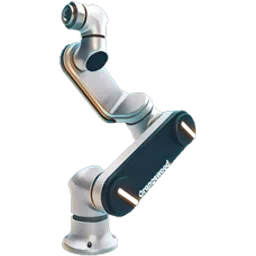
Orangewood Labs develops AI-powered robotic arms designed for collaborative use in manufacturing environments, enabling tasks such as bin picking, visual inspection, and powder coating. These robotic systems reduce manual labor, enhance precision, and improve operational efficiency, allowing workers to focus on higher-value activities.
Danu Robotics manufactures AI-controlled robotic waste sorting systems designed for picking mixed recyclable materials in material recovery facilities. Their patented, retro-fittable two-arm robots integrate computer vision for high-accuracy object identification and efficient material separation. The company provides a cost-effective solution that minimizes disruption while improving operational performance in waste management.
Chestnut Robotics builds a modular robot hand with sub‑millimeter accuracy and closed‑loop force control, enabling precise handling of fragile, high‑tolerance components on real production lines.
The company provides modular robotic automation platforms that combine six‑degree‑of‑freedom arms with integrated stereo vision and AI inference for high‑precision assembly, inspection, and material handling. Its plug‑and‑play hardware and RESTful/OPC‑UA software enable real‑time motion planning, vision‑based closed‑loop control, and seamless integration with MES and ERP systems, while cloud dashboards deliver KPI monitoring and predictive maintenance. The solution scales from single‑cell units to coordinated workcells for mid‑size to large manufacturers in automotive, electronics, and consumer goods.
Connected Robotics designs and manufactures robotic arms specifically for the food industry, focusing on automating food assembly processes and quality inspection using AI-driven software. Their solutions address labor shortages and inefficiencies in food preparation, enhancing productivity and consistency in food service operations.
Almond provides Axol, a dual‑arm robot built for physical AI applications. Each 7‑DOF arm offers an 860 mm reach, 6.5 kg payload and a 500 Hz control loop, while internally routed wiring and a durable chassis enable reliable operation in industrial settings. An open‑source Python SDK with bimanual inverse kinematics, VR teleoperation and LeRobot bindings lets researchers and developers train, test, and deploy AI‑driven manipulation directly on the robot.
Rigbetel Labs provides modular mobile robot and robotic arm platforms that can be quickly assembled from interchangeable locomotion, perception, and manipulation modules. The hardware is pre‑calibrated and compatible with ROS/ROS 2, allowing product teams and research labs to focus on software development while receiving engineering support and remote diagnostics.
Inovo Robotics develops a low-cost collaborative robot (cobot) designed to automate repetitive and hazardous tasks within existing workforce processes. Their modular robotic arms and intuitive software enable businesses to enhance operational efficiency and reallocate staff to more valuable work without the need for extensive robotics experience.
RobotAI develops software for 3D pose estimation using only a single RGB camera. The platform allows users to scan objects and generate specific models for reliable object detection and 3D position calculation. This technology supports various industrial automation tasks such as robotic arm control, pick and place operations, and machine tending.
Deplotic designs and manufactures inflatable and deployable robotic arms, such as the IDRA system, for in-orbit servicing applications. These modular manipulators offer a large workspace and high payload capacity while minimizing stowed volume for efficient spacecraft integration. The technology supports satellite self-maintenance, enhancing the operational lifetime and sustainability of space assets.
This company developed a fully automated kiosk featuring a 6-axis robotic arm to prepare customizable bubble tea drinks. The system aims to increase profitability for boba shop operators by automating the beverage preparation process. Drinks are served from order to hand in under two minutes with high ingredient capacity.
HashTech provides an AI-driven platform for nursing homes that monitors resident mobility, predicts fall risk, and delivers robotic-assisted physiotherapy through its ErgoBot arm. The system also includes autonomous logistics robots for medication and linen transport, and a cloud‑based analytics dashboard that supplies clinicians with real‑time alerts and longitudinal performance metrics. By automating routine tasks and standardizing rehabilitation programs, the solution helps facilities improve care consistency while reducing caregiver workload.
Evolve Robotics provides modular, plug‑and‑play robotic systems designed for small and medium manufacturers to automate assembly, material handling, and inspection tasks. Their lightweight hardware and open‑source software enable visual workflow programming or API integration, while built‑in safety sensors allow collaborative operation without cages. A cloud dashboard delivers real‑time performance analytics, predictive maintenance alerts, and over‑the‑air updates, helping customers increase throughput and reduce labor costs.
Daxo Robotics builds AI‑driven autonomous robotic hands that use an ultra‑redundant muscle‑array architecture to provide far more degrees of freedom than human‑inspired designs. The system combines real‑time machine‑learning control with fault‑tolerant actuation, delivering precise, reliable manipulation of irregular or delicate objects for industrial manufacturers, system integrators, and research labs.
This company designs and manufactures robot end effectors, specializing in solutions optimized for additive manufacturing processes. They offer customizable grippers, including electric and vacuum variants, tailored to specific workpieces and applications. ARMA also provides robot mounting bases and acts as a distributor for Formlabs 3D printers.
The startup provides a robotic arm integrated with balances and sensors to automate the calibration of handheld pipettes, transforming a labor-intensive process into a routine task. This technology generates precise performance data, enhancing pipette management and reducing risks associated with manual calibration.
Source Robotics provides open‑source robotic hardware and software that lowers the cost and technical barriers for developers, educators, and small manufacturers. Their product line includes the Spectral Micro brushless motor controller and the PAROL6 6‑DOF robotic arm, both offered as fully documented kits or ready‑to‑use units with Python, ROS2, and Arduino integration. By releasing all CAD, firmware, and libraries under open licenses, they enable rapid prototyping, research, and low‑volume automation without vendor lock‑in.
This company provides complete 3D concrete printing systems, including rugged, mobile printers and specialized materials for construction. Their technology offers significant gains in efficiency, achieving up to 70% faster build times and reduced labor costs across residential, commercial, and government sectors. The systems are engineered for durability and feature a multi-functional robotic arm capable of various construction tasks beyond printing.
Roboligent develops force-controlled robotic arms that automate physical therapy exercises, providing precise and consistent rehabilitation for patients. This technology addresses the need for effective and scalable physical therapy solutions, enhancing patient recovery while reducing the burden on healthcare providers.
Robohood develops an AI-powered Robotic Art Studio Suite that integrates robotic arms with proprietary software for automated painting. This platform allows artists, businesses, and educators to create physical artwork from digital inputs or live event renderings. Customers can purchase or rent the hardware and software solution, or commission custom robotic paintings directly.
AlphaOne Robotics provides Sigma, an intelligent robotic system that automates truck and container unloading in distribution centers and large warehouses. Using vision‑based perception, AI algorithms, and a high‑throughput robotic arm, Sigma identifies, grasps, and unloads mixed pallets at speeds exceeding industry averages, while integrating with existing conveyor or palletizing equipment through standard interfaces.
Kyber Labs develops a novel, low-cost robotic manipulation platform engineered specifically for AI-based controls. This hardware provides the fluid, dexterous movement necessary for delicate manipulation tasks in unstructured environments. The company focuses on creating general-purpose hands and bimanual systems to enable large-scale data collection for embodied AI training in assembly and manufacturing.
Sarcomere Dynamics develops the ARTUS Lite, a plug-and-play robotic hand designed for high-dexterity manipulation in industrial automation and teleoperation. This end-effector offers near-human capability with 20 degrees of freedom, enabling intuitive and versatile robotic interaction. The technology focuses on delivering compact, lightweight, and economical solutions for advanced robotic grasping and manipulation tasks.
Aripix Robotics develops and installs 6-axis industrial robotic manipulators designed to automate repetitive tasks in manufacturing environments, such as CNC machining and assembly line operations. By replacing manual labor, their robots enhance operational efficiency, reduce error rates, and enable continuous production without the constraints of human labor regulations.
Graspian provides customized end-of-arm tools for robotics integrators facing complex grasping challenges beyond standard capabilities. The company specializes in designing and building bespoke tooling solutions for automation applications. This expertise helps clients significantly reduce development time and associated costs for specialized robotic tasks.
Xairo develops AI‑driven robotic platforms and tools that enable safe, trustworthy interaction with technology across health, education, exploration and disaster response. Their product line includes autonomous robots such as the T‑REX training robot, the HAUK mapping quadcopter, and the G‑RAFe ground arm, plus the TrustAI service for evaluating AI trustworthiness, and they offer advanced ROS2‑based robotics courses.
Archytas designs, manufactures, and supports custom automation solutions to reduce operating costs and increase productivity for clients, primarily in the packaging industry. The company operates a network of localized, autonomous microfactories to deliver superior service and support near client sites. They offer a proprietary, cost-effective robotic arm technology designed for micron accuracy in production environments.
Bia Robotics develops the i.R.i.S. system, an intelligent robotic platform that delivers personalized wellness and massage treatments using advanced AI and 6-axis robotic arms. This automated solution provides spas and wellness centers with consistent, high-precision therapy available 24/7. The technology streamlines operations by reducing labor costs while ensuring standardized, high-quality service delivery.
This company provides plug-and-play robotic arms with a point-and-click interface, enabling biotech and therapeutics companies to easily automate lab processes. Their computer vision technology simplifies robot programming, reducing the need for specialized expertise.
The startup develops industrial robots and linear actuators that utilize parallel kinematics for precise multi-function operations in machining and assembly processes. Their technology enhances production efficiency and accuracy, addressing the need for reliable automation in complex industrial applications.
Finrip designs and manufactures modular, multi‑digit robotic grippers for industrial robots and cobots. The grippers enable precise, delicate, or firm handling for complex pick‑and‑place, assembly, and material‑handling tasks, giving manufacturers flexible automation solutions. Finrip sells directly to OEMs and system integrators and provides associated support services.
Animo Robotics provides lightweight, low‑inertia robotic arms that can be added to existing kitchen lines without retrofitting. The plug‑and‑play arms use standard kitchen utensils to automate plating with human‑level speed and precise portioning, offered on a usage‑based subscription.
Robot Era develops high-performance humanoid robots, including the STAR1 and XHAND1, utilizing advanced embodied intelligence and adaptive hardware platforms. These robots enhance operational efficiency in manufacturing, logistics, and service industries by performing complex tasks such as assembly, item handling, and customer interaction.
Cobodoc provides a surgical cobotics platform that adds real-time motion compensation and adaptive control to minimally invasive procedures, ensuring sub‑millimeter instrument accuracy on moving tissue. The modular, cost‑effective robotic arm and integrated navigation suite enable hospitals, surgical centers, and field medical teams to improve reproducibility, shorten operation times, and reduce patient length of stay.
FLINTZ provides modular robotic platforms with interchangeable arms and end‑effectors that can be retrofitted onto existing production lines. Its AI‑driven motion planning, edge‑computing analytics, and open REST/OPC‑UA APIs enable high‑precision, flexible automation and predictive maintenance for automotive, electronics, and consumer‑goods manufacturers.
Sol Robotic develops the HERA robotic arm platform, featuring 6 degrees of freedom and proprietary linear actuation technology, designed for outdoor applications in construction, agriculture, and logistics. HERA offers a workspace over 500 times larger than competing solutions, enabling efficient automation in large environments while supporting payloads of up to 25 kg at a distance of 3 meters.
PickNik Robotics provides a development platform that enables organizations to deploy AI-driven solutions for robotic arms in unstructured environments, such as construction and agriculture. By reducing research and development costs, the platform accelerates time to market for complex robotic applications that require adaptability to variable conditions.
This startup develops a humanoid robotic hand designed for industrial automation, featuring a lightweight build, high payload capacity, and integrated tactile and position sensing. The hand offers easy integration and gesture-based control, enabling flexible task execution in various manufacturing and logistics environments.
Kailas Robotics designs lightweight robotic arms that can be mounted on dynamic platforms like drones, enabling automatic object recognition and capture while in motion. This technology addresses the challenges of performing precise tasks in unstable environments, such as remote sample collection and hazardous material handling.
Aubo Cobot provides compact collaborative robots that can be easily programmed and integrated into existing workcells for repetitive tasks such as pick‑and‑place, assembly, and inspection. Their six‑axis arms (up to 7 kg payload) feature drag‑and‑drop software, built‑in safety sensors, and cloud connectivity for real‑time monitoring and remote support, enabling small‑to‑medium manufacturers and logistics firms to automate processes without extensive robotics expertise.
Rolleri Robotic provides plug‑and‑play collaborative robot cells (COBOTIC series) that integrate a six‑axis Universal Robots arm with welding generators and interchangeable tooling for TIG, MIG/MAG welding, grinding, polishing and cleaning. Their dedicated software enables fast, joystick‑style programming on the robot’s grip, allowing SMEs to automate small‑lot, multi‑process production without specialist coding, while offering built‑in safety, Industry 4.0 data collection, and optional AR remote assistance.
nPROCODE_DRESS utilizes robotic arms for 3D printing garments, combining sustainable materials with automated production methods to minimize labor and fabric waste in the fashion industry. The company addresses the inefficiencies of traditional garment manufacturing by offering ready-to-wear collections that enhance personal expression and confidence through innovative design.
CynLr develops a vision platform that enables robotic arms to grasp and manipulate objects without pre-training, using advanced techniques like convergence depth mapping and force-correlated visual mapping. This technology addresses the challenge of object recognition and manipulation in unstructured environments, allowing robots to adapt to various shapes and orientations in real-time.