Reselo develops a patented biorefinery process to produce a fossil-free elastomer from birch bark, a byproduct of the pulp and paper industry. This sustainable biomaterial significantly reduces carbon emissions by up to 90%, providing a renewable alternative to traditional rubber in various applications.
Find Investable Startups and Competitors
Search thousands of startups using natural language—just describe what you're looking for
Plastics And Rubber Products Startups - Seed
50 companies matched by StartupSeeker’s semantic search. Average reported funding: $4.2M.
Snapshot from
UBQ Materials produces a bio‑based thermoplastic composite called UBQ™ Evolved Materials™ by converting mixed household waste—including organics and hard‑to‑recycle plastics—into a climate‑positive substitute for oil‑based plastics. The material matches the price and performance of conventional polymers and can be used as a drop‑in replacement in existing manufacturing processes such as injection molding, extrusion, and 3‑D printing, enabling manufacturers to reduce emissions at scale.
Shellworks produces VIVOMER, a biomaterial made from fermented plant waste that matches the look, feel, and performance of conventional plastics while being free of BPA, phthalates, and microplastics. The material can be processed on existing injection‑moulding, blow‑moulding, and extrusion equipment and biodegrades in soil after use, offering brands a plug‑and‑play, plastic‑free packaging solution at scale.
Cirplus operates a B2B marketplace that connects businesses with a global network of suppliers for procuring certified recycled plastics at scale. By standardizing material data and facilitating supplier matchmaking, Cirplus addresses the challenge of sourcing high-quality circular materials for various industries, including packaging, automotive, and construction.
Ukhi produces bio-granules from hemp and bamboo that can be directly utilized in thermoplastic applications such as injection molding and film drawing, creating compostable products. This technology addresses plastic pollution by providing a sustainable alternative to conventional plastics, contributing to environmental conservation.
ULUU develops biodegradable materials derived from seaweed to replace conventional plastics, addressing the environmental crisis caused by plastic pollution. Their technology transforms ocean-sourced biomass into sustainable alternatives, reducing reliance on fossil fuels and minimizing waste in marine ecosystems.
Kelpi develops bioplastic packaging using a seaweed-derived coating that provides a superior water barrier, offering a sustainable alternative to fossil-fuel plastics. This solution addresses the environmental impact of single-use plastic packaging by being marine-safe and home-compostable.
This startup manufactures biodegradable packaging materials from crop stubble waste, providing a sustainable alternative to traditional plastics. Their products feature water-resistant, fireproof, and anti-static properties, addressing the environmental impact of packaging waste while promoting the use of organic materials.
Kubik manufactures building components from recycled plastic waste, creating low‑carbon, affordable construction solutions for developers and housing projects. Their trademarked modular products replace traditional high‑emission materials, reducing the construction sector’s CO₂ footprint while providing durable, aesthetically versatile structures. Kubik sells these components directly to construction firms and partners, generating revenue through product sales and project‑based contracts.
This startup manufactures architectural components using large-scale 3D printing technology with recycled plastic materials, specifically producing concrete formwork and interior/exterior panels. By providing sustainable building materials, the company addresses the labor shortage in construction and enhances resource recycling in the industry.
Lignin Industries transforms lignin, a by-product of the forest and agricultural industries, into Renol®, a thermoplastic biomaterial that can replace fossil-based plastics in various applications. This technology enables manufacturers to reduce fossil fuel dependency and lower CO2 emissions while utilizing existing production machinery for a seamless transition to sustainable materials.
ByFusion Global transforms non-recyclable plastic waste into ByBlock, a reusable building material, through a zero-waste, carbon-neutral process that requires no sorting or prewashing. This technology directly addresses the global plastic waste crisis by diverting landfill-bound plastics and reducing CO2 emissions by 83% compared to traditional concrete blocks.
Sway develops seaweed-based materials that serve as compostable alternatives to traditional plastics, specifically targeting flexible packaging applications. By utilizing natural polymers from seaweed, Sway addresses plastic pollution and promotes a circular economy through regenerative design principles.
ZeroCircle develops biodegradable materials derived from sustainably harvested seaweed, providing eco-friendly alternatives to traditional plastics. The company addresses the environmental impact of plastic waste by offering tree-free paper, natural coatings, and pellets that contribute to a circular economy.
The startup specializes in thermoformed packaging designed for the food packaging industry, focusing on optimizing recycled content and enhancing product recyclability. By providing sustainable packaging solutions, the company aims to reduce plastic usage and improve operational efficiency within the food sector.
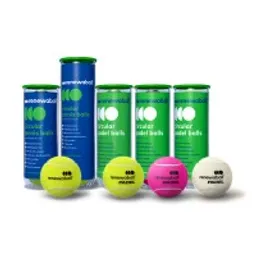
This startup manufactures circular tennis and padel balls by collecting, shredding, and separating used balls, directly addressing the environmental impact of traditional ball production. Their sustainable products contribute to the achievement of Sustainable Development Goals 12, 13, and 14, offering customers an eco-friendly alternative that reduces waste and pollution.
reTyre is the first company to mass-produce reusable pneumatic tyres using patented technology that eliminates the need for rubber, significantly reducing greenhouse gas emissions by up to 82% compared to conventional tyres. Their sustainable tyres, made from renewable materials, address the environmental impact of traditional tyre manufacturing and disposal.
GAIA BioMaterials manufactures Biodolomer, a limestone-based biodegradable material that mimics the properties of plastic without leaving microplastics and significantly reduces CO2 emissions during decomposition. Their products, including pouches, trays, and bottles, provide sustainable alternatives to traditional plastic packaging, addressing the environmental impact of plastic waste.
This startup manufactures recyclable materials from plastic waste, producing ecological hardscaping products such as panels and walkways. By transforming plastic pollution into durable, customizable designs, the company enables architects and designers to create sustainable infrastructure solutions.
This company manages plastic waste by collecting PET, HDPE, and LDPE plastics through a network of collectors in Cameroon. The collected materials are sorted, washed, and processed into flakes and PET straps. These recycled raw materials are then sold locally and internationally to support a circular economy.
Birch Biosciences develops high-performance enzymes using generative AI and high-throughput screening to enable advanced plastic recycling. This proprietary enzymatic process breaks down plastic polymers into monomers, allowing for the production of 100% recycled content plastics matching virgin quality. The technology significantly reduces greenhouse gas emissions in plastic manufacturing while achieving competitive process economics.
This startup manufactures plastic-free laundry and skincare products using biodegradable materials and natural ingredients, providing effective alternatives to traditional household items. By eliminating plastic from their product line, they offer affordable solutions that promote home hygiene while minimizing environmental impact.
Plastic Move produces bio-based and biodegradable bioplastics from starch-based food waste, specifically waste bread, to replace petroleum-based plastics in various industries. This approach reduces carbon emissions by up to 50% and supports the circular economy by upcycling waste materials into high-quality, multi-use products.
B'ZEOS produces seaweed‑based biopolymer pellets that can be processed on standard packaging equipment to create fully bio‑based, home‑compostable single‑use containers such as films, trays, and pouches. The material offers high oxygen and grease barrier performance, heat‑sealable properties, and can be customized for transparency, thickness, and tear strength, enabling food, cosmetics, and pharmaceutical packaging manufacturers to replace petroleum‑based plastics without redesigning production lines.
FlexSea produces seaweed‑derived bioplastic pellets that are certified home‑compostable (EN13432) and can replace petroleum‑based polymers in injection molding, 3D printing, and cosmetic formulations. Using bacterial fermentation to extract the full biomass of cultivated seaweed, the company offers ready‑to‑process granules and custom formulations that integrate with existing manufacturing equipment while delivering a renewable, low‑carbon material footprint.
Biovox provides medical‑grade bioplastics (MedEco) made from renewable polymers such as bio‑PE, PLA and PEF that meet ISO 13485, VDI 2017 and ISO 10993 standards, ensuring patient safety and compliance with critical‑substance regulations. The materials are compatible with injection molding, extrusion and film processes, can be supplied in standard or custom formulations, and enable up to 85 % CO₂ reduction with full mechanical and chemical recyclability. By offering consistent supply, technical consulting and regulatory support, Biovox helps medical‑device, pharma packaging and laboratory equipment manufacturers adopt sustainable, high‑performance polymer solutions.
Evoralis creates high‑efficiency enzymes that selectively depolymerise plastics such as PET, nylon, and elastane back into their original monomers, which can be repolymerised into virgin‑quality polymers for a circular plastic economy. Using a patented microfluidic ultra‑high‑throughput screening platform, the company rapidly discovers and optimises enzymes on real plastic particles, enabling low‑energy, scalable recycling that can be integrated into existing recycling infrastructure. Enzyme products are sold directly or licensed with accompanying bioprocess know‑how, providing recyclers, waste‑management firms, and manufacturers in textiles, automotive, packaging and related sectors with a sustainable alternative to conventional recycling methods.
The startup has developed a synthetic biology platform that utilizes plant cell cultures in bioreactors to produce valuable end products like aloe, natural rubber, and citrus oils without generating waste. This technology enables clients to optimize plant cell growth for efficient and sustainable production processes.
Krill Design supplies REKRILL®, a patented biodegradable polymer made from agro‑food by‑products that can replace conventional engineering plastics such as PP, ABS, PET, PVC, PC and HDPE in standard molding and extrusion processes without equipment changes. The material offers comparable mechanical performance, is fully compostable in marine environments, and reduces CO₂ emissions by up to 67 % per kilogram, enabling OEMs and brand manufacturers to meet sustainability requirements.

The startup develops chemical recycling technology that converts recyclable plastic waste into hydrocarbons through thermal cracking, while capturing excess gas to generate heat for the conversion process. This technology diverts plastic waste from landfills and incineration, reducing emissions associated with the production of new plastics from fossil-derived petrochemicals.
This startup develops compostable biomaterials using lignin and cellulose to create sustainable packaging solutions. Their technology reduces reliance on traditional plastics, enabling businesses to offer eco-friendly packaging that maintains functionality and aesthetics at competitive costs.
This startup produces sustainable packaging solutions made from biodegradable plastics that decompose into various forms such as courier satchels and bubble bags. By replacing traditional plastic materials, the company aims to significantly reduce plastic waste in retail and promote a circular economy.
This startup develops a range of products made from recycled plastic waste sourced from beaches, landfills, and illegal dumpsites. By transforming plastic pollution into usable goods, the company enables customers to minimize their plastic footprint and contribute to environmental sustainability.
The startup specializes in recycling technology that processes waste tires and plastics by shredding and granulating them into raw materials. This method enables industries to convert polymer waste into reusable resources, contributing to a circular economy and reducing environmental pollution.
The startup transforms non-recovered plastic waste into permeable tiles designed for car parks and traffic lanes, utilizing a patented process that enhances water management. This technology addresses the issue of urban runoff and carbon emissions by providing eco-friendly surfaces that facilitate rainwater absorption.
Applied Bioplastics manufactures bioplastics for retail, packaging, and medical applications using renewable materials that enhance recyclability. This technology provides sustainable alternatives to traditional plastics, reducing environmental impact and improving recycling efficiency.
The startup develops a biodegradable packing technology that produces water-soluble bags from a composite of calcium carbide and natural gas, which dissolve in water within five minutes. This technology provides manufacturers with an environmentally friendly alternative to traditional plastic bags, addressing the growing demand for sustainable packaging solutions.
The startup operates a fluid-mechanical sorting system that efficiently separates complex plastic waste mixtures for recycling. By optimizing production processes, the technology enables manufacturers to minimize plastic waste and enhance resource recovery, thereby reducing their environmental impact.
Rheom Materials develops sustainable material alternatives by pioneering the use of biopolymers derived from plant-based matter. The company utilizes advanced melt extrusion techniques to process and modify these biobased components for compatibility across various manufacturing processes. This platform enables scalable, local production of sustainable materials for the fashion, electronics, and automotive sectors.
This company provides a centralized platform for buyers to access thousands of verified, quality recycled plastic options from numerous suppliers. They ensure material quality through verification and technical documentation, offering competitive, data-driven pricing and streamlined logistics across Europe. Ambio facilitates seamless procurement of recycled polymers for applications like injection molding while connecting recyclers with consistent industrial demand.
This startup manufactures sustainable home goods, including shower liners and body buffer systems, designed to minimize plastic waste through a circular economy model. By offering free recycling services, the company provides consumers with environmentally responsible alternatives that contribute to waste reduction and resource efficiency.
Alpine Advanced Materials manufactures HX5®, a lightweight thermoplastic nanocomposite designed to replace heavy aluminum components in various industries, including defense and aerospace. This technology reduces overall system weight, enhancing performance and efficiency while addressing the challenges of material durability in extreme environments.
This company specializes in solvent-based recycling processes for engineering plastic waste, such as ABS, PC, PA, and PMMA. The process dissolves the target plastic to effectively remove interior and exterior contaminants, yielding high-quality recycled material superior to mechanically recycled outputs. This method enables the closed-loop recycling of engineering plastics required for high-end applications in electronics and automotive sectors.
This startup develops large-scale manufacturing technologies for polyurethane (PUR) products aimed at the construction sector, focusing on energy-efficient materials. By utilizing cost-effective production techniques, the company addresses the industry's need for sustainable and high-performance construction plastics.
The startup develops sustainable bioplastic technology that utilizes renewable biomass to create biodegradable materials, significantly reducing CO2 emissions and long-term plastic pollution. Their cost-efficient solutions enable plastic manufacturers to implement environmentally friendly practices while supporting reduction, reuse, and recycling initiatives.
This startup specializes in creating recyclable products from discarded nylon sourced from oceans and land, utilizing advanced recycling techniques to convert waste into raw materials. By enabling clients to replicate the performance of various polymer yarns, hardware, and adhesives, the company addresses the environmental impact of plastic waste and promotes a circular economy.
This startup develops personal technology products, including portable and wireless chargers, made from plant-based bioplastics, organic hemp, and recycled plastic bottles. By providing eco-friendly electronic accessories with plastic-free packaging, the company aims to minimize e-waste and plastic pollution in landfills.
Renegade Plastics supplies a low‑carbon, polypropylene‑based coated fabric that replaces PVC and polyethylene alternatives in industrial textiles. The material is 30‑40% lighter, retains comparable strength, and offers high UV, thermal, chemical, waterproof, and fire‑retardant performance without lead, phthalates, PFAS, or VOCs, while being fully recyclable for a circular end‑of‑life. It integrates with existing manufacturing processes, enabling manufacturers in signage, sports equipment, transportation seating, agriculture, and packaging to adopt a sustainable swap without workflow changes.
This startup manufactures durable, reusable alternatives to single-use products such as cotton swabs, makeup pads, tissues, and menstrual pads, utilizing high-quality, non-toxic materials. By providing sustainable options, the company aims to reduce plastic pollution and minimize waste in everyday consumer habits.
This company upcycles agricultural waste streams, specifically wheat, into compostable bioplastics as a sustainable alternative to traditional plastics. By transforming residual flows into valuable materials, they aim to reduce reliance on fossil fuels and promote environmentally friendly packaging solutions.