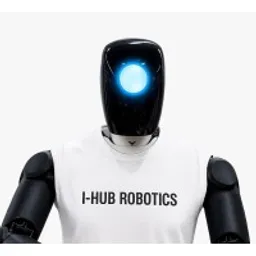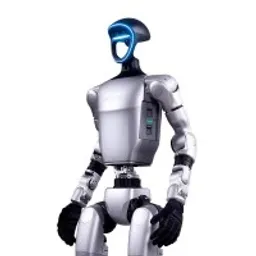
1X develops humanoid robots equipped with advanced AI and robotics technology to perform physical labor tasks alongside humans. By providing a scalable and safe labor solution, 1X targets the multi-trillion-dollar physical labor market, addressing labor shortages across various industries.
Find Investable Startups and Competitors
Search thousands of startups using natural language—just describe what you're looking for
Humanoid Robot Startups
50 companies matched by StartupSeeker’s semantic search. Average reported funding: $101M.
Snapshot from
Enchanted Tools develops humanoid robots powered by AI designed for assistance and engagement across various sectors. These social robots integrate utility with engaging interaction to enhance user experience in healthcare, hospitality, and retail environments. The company focuses on creating characters that blend advanced robotics with emotional impact for practical applications.
Sanctuary AI develops industrial-grade humanoid robots equipped with embodied AI systems that mimic human movement and cognitive processes, enabling them to perform tasks requiring dexterity and fine manipulation. The company addresses the labor crisis by providing a scalable solution for dull, dirty, and dangerous jobs across industries such as automotive, manufacturing, and logistics.
Persona AI provides a modular industrial humanoid robot platform that delivers human‑like dexterity and machine endurance for skilled physical tasks such as welding, assembly, painting, grinding, and mining. Designed for harsh, high‑risk environments, the robots integrate standard industrial tools, weather‑proof hardware, and safety cues to operate continuously alongside human crews, reducing downtime and improving safety for large‑scale operators in shipbuilding, energy, construction, and manufacturing.
Oversonic Robotics develops cognitive humanoid robots, like the RoBee Series R, designed for autonomous operation in industrial and collaborative environments. These robots integrate AI-based perception and real-time decision-making to perform complex tasks such as pick-and-place, quality inspection, and logistics support. The platform enhances human-machine collaboration by safely handling strenuous or repetitive work across manufacturing, healthcare, and intralogistics sectors.
Reflex Robotics provides a general‑purpose wheeled humanoid robot that can perform end‑to‑end industrial tasks such as material handling and assembly with superhuman reach, payload, precision, and battery life. The platform combines production‑grade hardware, a real‑time supervision layer for predictable recovery, and Reflex Intelligence AI that learns from supervised runs to improve autonomy and performance over time, while integrating plug‑and‑play with existing factory equipment for day‑one deployment.
Aeolus Robotics develops a dual-arm humanoid robot, aeo, designed for tasks such as disinfection, delivery, and security monitoring in various environments, including healthcare and property management. By automating routine functions, aeo reduces staffing needs and enhances operational efficiency while maintaining a safe and clean environment.
Holiday Robotics builds lightweight, high-degree-of-freedom humanoid robots that can learn tasks through demonstration, reinforcement learning, and continual adaptation. Their modular hardware and human-like kinematics let manufacturers, logistics firms, and service companies automate repetitive manual work in existing workspaces without extensive re‑engineering, improving safety and productivity.
Universal Mechanical Assistant (UMA) develops general‑purpose mobile and humanoid robots that combine human‑level dexterity with advanced AI perception of the physical world. Their platform is designed for real‑world tasks, and they plan to launch pilot programs in logistics and manufacturing by 2026 to demonstrate the robots’ capability to handle complex material‑handling workflows. UMA’s multidisciplinary approach integrates mechatronics, software, and simulation to create intelligent robots that improve everyday quality of life.
This startup develops a semi-humanoid robot equipped with artificial intelligence for automated medication management, featuring autonomous navigation and voice interaction with face-tracking capabilities. The technology enhances operational efficiency and safety in healthcare and other industries by minimizing human error in medication distribution.
Figure develops Figure 03, a general-purpose humanoid robot designed for everyday household tasks. This robot utilizes the proprietary Helix AI system, enabling it to navigate and interact within unpredictable, ever-changing home environments. The platform aims to provide human-like assistance by performing chores in a manner consistent with human execution.
UBTECH provides a range of humanoid and service robots—such as the Walker S series for industrial automation, Cruzr S2 for commercial service, and Alpha‑Mini for consumer use—designed to operate safely alongside humans and perform repetitive or hazardous tasks. The robots combine AI‑driven perception, autonomous navigation, and cloud‑based management to enable material handling, quality inspection, assembly, and interactive customer service, while modular AI education kits let schools teach coding and robotics through hands‑on projects.
Agility Robotics manufactures humanoid robots, specifically Digit, which integrates into material handling workflows to enhance operational efficiency in various industries. By automating labor-intensive tasks, Digit provides businesses with a cost-effective solution to workforce shortages and productivity challenges.
This company develops musculoskeletal, intelligent androids designed to assist with common daily life problems. Their product line includes bipedal android companions for both individual and business applications. Development efforts also focus on creating advanced robotic hands with human-level dexterity.
Red Rabbit Robotics provides humanoid robotic systems that replicate human manual capabilities for manufacturing, packaging, logistics, and food production. Their robots operate continuously with adaptive learning, integrated vision, and safety sensors, reducing labor costs, errors, and turnover while allowing human staff to focus on higher‑value tasks.
Unsupervized builds affordable, high‑performance humanoid robots for industrial settings such as warehouses, factories, and logistics hubs. Their AI‑driven perception and control system lets the robots learn directly from human operators on the shop floor, enabling zero‑training deployment and immediate safety and productivity gains. The platform also aggregates data from all units in the cloud to continuously improve general‑purpose autonomy across diverse environments.
Ogmen Robotics develops companion robots for families, integrating human-centered design with advanced computation for natural interaction. The company focuses on creating robotics technologies that understand, communicate, and support users like helpful companions. Their work spans industrial design, embedded systems with AI inference, and state estimation algorithms to power autonomous functionality.
The startup develops robots equipped with vision machine learning to serve as companions for humans, enabling real-time communication and monitoring. These robots assist in crime prevention and home care, providing businesses and families with efficient support for daily tasks and heavy workloads.
MAXimuz Technology develops AI-powered humanoid robots that enhance customer engagement and operational efficiency across healthcare, retail, and education sectors. Their proprietary Actualize AI Technology enables adaptive behavior and human-centric interaction for tailored industry applications.
Humanoid (humanoid.guide) is a centralized information platform for the humanoid robot industry, offering a searchable catalog of nearly 200 robot models with detailed technical specifications and performance metrics. It provides advanced filtering tools, market reports, and a newsletter to help investors, manufacturers, integrators, and researchers compare platforms, assess market opportunities, and stay informed on industry trends.
Humandroid provides an end-to-end platform for training and operating humanoid robots within industrial settings. This system transforms robotics deployment from isolated pilots into scalable, continuous learning processes. The platform facilitates the integration of humanoid robotics, enabling humans and robots to work together effectively in real-world environments.
Furhat Robotics develops humanoid robots equipped with large language model (LLM) technology to facilitate natural, human-like conversations in various applications, including hospitality and employee training. Their FurhatAI platform enables rapid prototyping and enterprise-grade deployment of conversational applications, reducing the time and cost associated with testing robotic interactions in real-world scenarios.
Pollen Robotics develops humanoid service robots equipped with two bio-inspired 7-DOF robotic arms for precise object manipulation and a VR application for teleoperation and data acquisition. Their open-source platform enables customizable human-robot interaction, addressing the need for adaptable robotic solutions in various real-world applications.
Heima Robotics provides A.D.A.M., a full-size, on-device humanoid robot platform designed specifically for developers. This platform translates AI intent into natural, safe, whole-body motion through an open SDK, enabling rapid iteration on embodied intelligence. It serves developers, startups, and research teams needing standardized, expressive hardware for real-world testing.
Unitree Robotics designs, manufactures, and sells ready‑to‑use quadruped and humanoid robots that combine lightweight mechanics, in‑house motors, reducers, controllers, and integrated 4D LiDAR for precise perception. Their platforms deliver high speed, long endurance (up to 5 hours) and autonomous navigation, enabling applications such as inspection, exploration, rescue, and interactive consumer use without extensive custom integration.
Robin provides an emotionally intelligent humanoid robot that delivers interactive games, conversational prompts, and cognitive exercises to pediatric, geriatric, and rehabilitation patients. The system includes safety sensors, emergency alerts, and a HIPAA‑compliant cloud analytics dashboard that integrates with EHRs, allowing clinicians to monitor engagement and adjust care plans while freeing staff to focus on core medical tasks.
Artly provides a generalized training and learning software platform for humanoid robots to execute complex physical tasks. This AGI system uses LLMs to compose goal-driven action sequences, enabling scalable, intelligent manipulation skills from day one. The platform supports data collection, behavior optimization, and cloud-based deployment of foundation models for commercial robotics applications.
LuxAI develops QTrobot, an expressive humanoid social robot that enhances engagement and learning for children with autism and special needs through interactive educational modules. The robot also serves as a research platform for human-robot interaction, providing valuable insights and progress monitoring for educators and parents.
This company develops rugged humanoid robots designed for deployment in challenging industrial environments. Their unified AI model allows robots to navigate diverse and unstable terrains while performing complex manipulation tasks. These cost-effective humanoid systems reliably handle payloads up to 60lbs, reducing the need for human presence in dangerous work settings.
SI Robotics is developing a fully European humanoid robotics stack, including proprietary bionic actuators and reinforcement learning capabilities. This infrastructure is designed for dual-use applications across commercial logistics and defense sectors. The company focuses on providing a trusted, sovereign supply chain independent of non-EU technology sources.
IntBot develops socially intelligent humanoid robots designed for autonomous operation in dynamic human environments like hospitality settings. Utilizing the IntEng platform, these robots interpret social cues and human intent to provide natural, contextual interaction at scale. The solution enables reliable social autonomy, allowing service staff to focus on complex tasks while robots handle routine inquiries and guest assistance.
Tokyo Robotics develops humanoid robots, such as Torobo, equipped with high-performance torque sensing and impedance control to automate repetitive and hazardous tasks in manufacturing and logistics. By implementing these robotic solutions, the company enhances productivity and safety, allowing human workers to focus on more complex and creative responsibilities.
Manifest develops sovereign autonomous humanoid solutions specifically for the European National Security sector. These humanoids address labor shortages and industrial backlogs by filling workforce gaps in high-cost inspection roles within defense and aerospace. By automating these tasks, the company enables the redeployment of human personnel to mission-critical functions, thereby increasing overall force capacity and accelerating defense contractor delivery timelines.
Kepler develops general-purpose humanoid robots, such as the Forerunner series, designed for extended operation with efficient power management. These robots integrate advanced sensing and precision manipulation capabilities for autonomous navigation and task execution. They are deployed across intelligent manufacturing, warehousing, logistics, and high-risk operational environments.
Autodiscovery is a system integrator and distributor of affordable mobile robots and humanoids, offering modular platforms such as legged, tracked, wheeled, and full‑size humanoid robots for outdoor, indoor, and harsh environments. It provides self‑developed hardware—including sensor heads (HEAD), dexterous robot hands (HAND), and the MoBiT bimanual teleoperation system—along with open‑source ROS 2 and proprietary navigation software to enable custom robotic solutions and rapid proof‑of‑concept deployments for security, agriculture, logistics, construction, mining, and research applications.
Fourier Robotics offers a full-stack platform for humanoid robot development and deployment, providing advanced hardware like the GR-1 and GR-2 robots alongside a comprehensive software toolkit. Their solutions empower researchers and businesses with integrated robotics technology for applications in research, industry, and healthcare.
Galaxea AI develops humanoid robots with embodied intelligence, enabling them to interact with and learn from the physical world. Their robots are designed for tasks requiring human-like dexterity and adaptability in various environments.
Alsanor develops humanoid robots engineered to automate repetitive hotel housekeeping tasks such as room restocking, floor cleaning, and concierge support. These autonomous systems aim to significantly reduce operational labor costs while maintaining consistent service quality. The technology allows hotel staff to reallocate time toward delivering enhanced guest experiences.
This company offers a connected robotic ecosystem for warehouses and factories, featuring modular humanoid robots, heavy-load cobots, and autonomous forklifts. These robots integrate into existing work cells to automate industrial tasks.
ROBROS designs and develops advanced humanoid robots focused on human-robot collaboration. The company specializes in creating physical AI systems capable of performing complex tasks in real-world environments, such as industrial and service sectors. Their core offering centers on delivering functional, adaptable humanoid platforms that enhance human capabilities and address labor shortages.
Hiverobots provides a modular software platform that equips humanoid robots to autonomously handle repetitive tasks such as inventory scanning, stock tracking, internal deliveries, and facility maintenance across retail, office, and hospitality environments. Their solution includes AI-driven perception, a testing ‘Robot GYM’, and a partnership model offering engineering support to move clients from proof‑of‑concept to a fully deployed robot workforce.
The startup has created a social humanoid robot that integrates with smartphones to function as an interactive educational companion, capable of displaying emotions and gestures. This technology provides an affordable solution for enhancing learning experiences, making education more engaging and accessible for users.
This startup develops 5G-enabled motion-controlled humanoid robots that utilize AI, IoT, and cloud technologies to enhance operational efficiency across various industries. By customizing robotic solutions, the company addresses the need for improved productivity and sustainability in business processes.
ZJ Humanoid offers a modular, general‑purpose humanoid robot platform that combines advanced AI cognition with interchangeable hardware such as legs, wheels, and dexterous manipulators. Its ROS‑compatible SDK and low‑code development environment let enterprises quickly configure robots for tasks like retail assistance, hazardous material handling, or industrial automation without deep robotics expertise.
Leju Robotics develops humanoid robots and an open platform for full-sized humanoid robotics, utilizing embodied intelligence in collaboration with Huawei Cloud. The company targets applications in industrial manufacturing, smart homes, and healthcare logistics, enhancing operational efficiency and user interaction in these sectors.
Evotion provides professional service robots for sale and rental to enhance operations in the event, restaurant, and facility cleaning sectors. Their solutions include humanoid robots for engagement, delivery robots for service, and autonomous cleaning robots to improve efficiency and customer experience.
Robozaps operates an online marketplace dedicated to the sale of new and used humanoid robots from various manufacturers. The platform connects buyers with diverse models suitable for personal, business, and educational robotics applications. Services include insured shipments, financing options for bulk orders, and access to aftersales support partners for customization and maintenance.
Robot Era develops high-performance humanoid robots, including the STAR1 and XHAND1, utilizing advanced embodied intelligence and adaptive hardware platforms. These robots enhance operational efficiency in manufacturing, logistics, and service industries by performing complex tasks such as assembly, item handling, and customer interaction.
Booster Robotics develops humanoid robots designed for AI firms and research institutions, facilitating rapid mass production and supply of standardized robotic components. Their technology addresses the need for advanced robotic platforms that enhance research capabilities and accelerate the development of AI applications in various fields.
This company develops life-sized, female humanoid robots, focusing on creating physical androids like the Adachi Rei model. They integrate character concepts into their robotic designs, aiming to advance the field of humanoid robotics. The company also offers related digital content and community support through platforms like Fanbox.