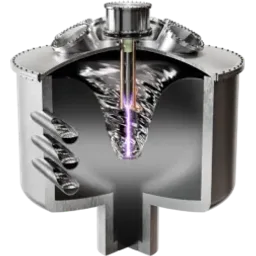
nT-Tao is developing a compact fusion reactor utilizing a Dynamic Stabilized Torus to generate 10-20 MW of electricity, providing a scalable and rapid deployment energy solution. This technology addresses the need for clean, reliable, and independent energy sources for various applications, including industrial facilities and remote locations.
Find Investable Startups and Competitors
Search thousands of startups using natural language—just describe what you're looking for
Fusion Reactor Startups
50 companies matched by StartupSeeker’s semantic search. Average reported funding: $179.1M.
Snapshot from
Avalanche Energy develops compact micro-fusion reactors that provide carbon-neutral power for distributed energy and mobility applications. These reactors can be rapidly manufactured and deployed, delivering continuous energy for up to three years, addressing the need for sustainable power in remote locations.
Astral Systems builds compact lattice‑confinement fusion reactors that generate over 1 trillion D‑T fusions per second in a containerized chassis. The reactors provide on‑site production of medical isotopes for hospitals and a high‑flux, tunable neutron source for research labs, with automated safety interlocks and API‑driven data integration.
Maritime Fusion is developing compact HTS‑tokamak fusion reactors that generate zero‑emission electricity for marine vessels, defense platforms, and remote off‑grid installations. By targeting power levels an order of magnitude lower than grid‑scale plants, the reactors avoid the most demanding heat‑flux and material challenges while delivering breakeven fusion (Q > 1) without long‑lived radioactive waste or melt‑down risk.
Kronos Fusion Energy develops advanced aneutronic fusion technology with the goal of achieving a high fusion energy gain factor (Q) of 40. The company focuses on creating clean, limitless energy solutions suitable for diverse applications including industrial, urban, and remote power needs. Their work centers on deploying proprietary fusion reactor designs like METROVOLT and AEGIS.
The startup develops high-temperature superconducting (HTS) tape technology that generates strong magnetic fields necessary for plasma confinement in magnetic fusion reactors. This technology enables the production of clean and sustainable electric energy by facilitating efficient fusion processes at elevated temperatures.
Develops a commercial laser-based nuclear fusion reactor that generates power by compressing and igniting deuterium and tritium fuels using high-intensity lasers. This technology aims to provide a sustainable, carbon-neutral energy source, reducing dependence on fossil fuels and addressing global energy demands.
Gauss Fusion develops a gigawatt‑class magnetic confinement fusion power plant (Gauss GIGA‑Kraftwerk) aimed for deployment by 2045, using high‑field superconducting magnets and a modular reactor design to achieve faster net‑energy gain. By repurposing infrastructure from decommissioned nuclear fission sites and partnering with leading scientists, industrial engineers, and energy stakeholders, the company reduces capital costs and construction time while streamlining licensing and grid integration for baseload clean power.
Renaissance Fusion develops stellarators utilizing high-temperature superconducting magnets and liquid metal shielding to create efficient and stable fusion reactors. This technology aims to provide a safe, abundant energy source to meet the growing global energy demand while reducing reliance on fossil fuels and emissions.
Proxima Fusion builds quasi‑isodynamic stellarators that remove toroidal plasma currents, enabling continuous, grid‑ready fusion power. Using high‑temperature superconducting magnets and its StarFinder cloud‑based optimization platform, the company accelerates compact reactor design and reduces plant size and cost for utility operators and energy investors.
Novatron is developing the NOVATRON™ fusion reactor, which utilizes a stable magnetic configuration to confine super-hot plasma for efficient nuclear fusion. This technology aims to provide a reliable, clean energy source that eliminates carbon emissions and reduces dependence on fossil fuels and nuclear fission.
Commonwealth Fusion is developing smaller, cost-effective tokamak fusion systems using high-temperature superconducting magnets to produce net energy from fusion. The company aims to deliver clean, abundant energy through its SPARC machine, paving the way for the first commercial fusion power plant, ARC, to combat climate change.
TAE Technologies builds a compact fusion power platform that uses neutral‑beam injection to create stable field‑reversed configuration plasmas, cutting hardware complexity and cost by about half compared to traditional fusion reactors. The system delivers carbon‑free baseload electricity and includes integrated solutions for grid‑scale battery storage, electric‑vehicle charging, and accelerator‑driven Boron Neutron Capture Therapy for precise cancer treatment.
Pacific Fusion is developing a modular pulsed magnetic inertial fusion system that generates more fusion energy output than the energy input, utilizing a fast electric pulser and small fusion chambers. This technology aims to provide affordable, reliable fusion power to meet the growing global energy demand and combat climate change.
Marvel Fusion pioneers laser-driven inertial confinement fusion to generate abundant, clean energy. This approach utilizes high-power, ultra-short pulse lasers and non-cryogenic fuels to initiate fusion reactions. The company is developing this technology to deliver sustainable fusion power to the grid by the mid-2030s.
OpenStar Technologies is developing levitated dipole reactors using High Temperature Superconductors to generate baseload fusion power for the electrical grid. This technology aims to eliminate reliance on fossil fuels by providing a reliable and sustainable energy source.
Develops fusion energy systems using Magnetized-Liner Inertial Fusion (MagLIF) technology, integrating high-efficiency impedance-matched Marx generators to achieve repetitive neutron generation and progress toward commercial fusion power. Addresses challenges in cost, scalability, and system complexity by delivering scalable fusion generators and prototypes, including the 1 TW TITAN and 15 TW Z-STAR, with over 99% accuracy in experimental simulations.
NearStar Fusion is developing a modular Magnetized Target Impact Fusion (MTIF) technology that enables the rapid integration of clean fusion energy into existing power grids and microgrid infrastructures. This approach addresses the need for a reliable, tritium-free energy source that can retrofit traditional hydrocarbon power plants, delivering limitless and always-on energy to cities and industries worldwide.
Helical Fusion is developing a magnetic confinement system for high-temperature plasmas to enable the commercial viability of fusion energy. This technology aims to provide a sustainable and stable energy source, addressing the urgent need for clean energy solutions to combat climate change.
The startup is commercializing laser fusion technology utilizing hydrogen-boron fuel (HB11) for energy generation in power grids. This approach provides a sustainable and environmentally friendly alternative to traditional energy sources, addressing the need for cleaner energy solutions in the energy sector.
Tokamak Energy builds compact spherical tokamaks that use high‑temperature superconducting magnets to generate strong magnetic fields for plasma confinement, achieving fusion‑relevant temperatures in a smaller, lower‑cost device. Their modular approach and reduced cryogenic requirements aim to provide scalable, clean power solutions for utilities, governments, and industrial partners.
Focused Energy is developing high repetition rate laser-driver systems and fast ignition targets to create a reliable fusion power plant that generates electricity, industrial heat, and hydrogen. This technology addresses the need for clean, alternative energy sources by harnessing fusion, which has the potential to significantly reduce carbon emissions.
Acceleron Fusion is developing muon-catalyzed fusion technology to create small, efficient power plants that operate at significantly lower temperatures than traditional fusion methods. This approach aims to provide a reliable source of clean energy, addressing the urgent need for sustainable solutions to combat climate change and enhance energy security.
Type One Energy Group develops stellarator fusion energy systems using high-field superconducting magnets and advanced manufacturing techniques to create a cost-competitive solution for clean energy generation. Their technology aims to provide a sustainable and abundant source of electricity, addressing the increasing global demand for reliable power while minimizing environmental impact.
Realta Fusion develops compact, scalable, and modular fusion energy systems based on magnetic mirror technology. These CoSMo fusion™ systems are designed to provide zero-carbon, cost-effective energy solutions for industrial heat and power applications. The modular design allows for faster implementation and scalability to meet diverse energy demands.
Marathon Fusion develops integrated fuel‑cycle technologies for commercial fusion, including neutron‑driven transmutation reactors that generate valuable radioisotopes and gold as by‑products, and metal‑foil pumping systems that boost tritium burn efficiency and processing speed. It also offers high‑precision isotope‑separation solutions for fusion reactors and industrial applications, helping operators reduce fuel losses, lower inventory costs, and create additional revenue streams.
Zap Energy is developing compact fusion power technology that eliminates the need for magnets or lasers, utilizing a novel approach to achieve nuclear fusion. This innovation aims to provide a cleaner and more efficient energy source, addressing the challenges of traditional fusion methods and their associated costs.
Helion is developing a patented plasma accelerator technology for magneto-inertial fusion, producing fifty-megawatt modules that generate zero-carbon electricity. This technology provides a low-cost and safe energy solution to meet the increasing demand for clean energy while minimizing environmental impact.
General Fusion builds Magnetized Target Fusion power plants that compress magnetized plasma with a liquid‑metal liner to produce neutron‑driven heat, which is transferred to steam turbines for carbon‑free baseload electricity. The liquid metal wall also breeds tritium and protects the vessel, allowing a simpler, lower‑cost design than laser or superconducting‑magnet fusion systems.
Kyoto Fusioneering supplies high‑performance gyrotron plasma heating systems, fusion fuel‑cycle modules, and blanket‑thermal‑cycle components that bridge the gap between fusion research and commercial power plants. Their turnkey "UNITY" projects integrate these subsystems, enabling energy developers and utilities to accelerate the deployment of clean, net‑zero fusion energy.
First Light Fusion is developing inertial fusion energy (IFE) technology using its proprietary FLARE approach. This method separates fuel compression from ignition to achieve high energy gain, enabling the engineering of simpler and more cost-effective fusion power plants.
Oxford Sigma develops engineered fusion core materials to enhance the operational lifespan of fusion pilot plants and facilitate the transition to commercial fusion power stations. The company provides materials technology and design services that address the challenges of energy security and climate change through the commercialization of fusion energy.
HelicitySpace develops scalable fusion propulsion engines, known as the Helicity Drive, to enable efficient and reusable travel into deep space. This technology addresses the need for faster and safer transportation for off-world industries and resource mining, while also facilitating clean energy production both in space and on Earth.
The startup manufactures microreactors that generate electricity from radioactive waste and thorium through molten salt reactions with plutonium and uranium. This technology provides a sustainable energy solution, enabling industries to utilize mining by-products while contributing to carbon neutrality goals.
This advanced technology company develops and commercializes portable and stationary microreactor technologies, including the KRONOS MMR and LOKI MMR systems. The company is vertically integrated, also focusing on nuclear fuel fabrication, HALEU transportation, and nuclear applications for space power systems. They provide modular, on-demand clean energy solutions for terrestrial and extraterrestrial needs.
Aalo manufactures compact nuclear reactors that utilize liquid metal coolant and UZrH fuel to achieve high energy density and simplified safety systems. These reactors can generate electricity at a target cost of 3¢ per kWh, providing a scalable solution for energy needs ranging from small data centers to large cities.
Develops kilowatt-scale micro-fission reactors using HALEU TRISO fuel and sodium heat pipes to provide autonomous, passively safe, and highly reliable power for mission-critical facilities and space applications. These reactors operate continuously for over three years without a sustaining supply chain, minimizing maintenance and enabling deployment in remote or resource-limited environments.
Thea Energy develops commercial fusion power by simplifying the stellarator architecture. The company replaces complex 3D magnet coils with mass-manufacturable modular coils managed by dynamic software controls. This approach aims to deliver an economical and scalable source of zero-emission energy for the global power supply.
High Temperature Superconductors, Inc. manufactures high-temperature superconducting wire using a proprietary pulse laser deposition process, enabling zero resistance and extreme efficiency for applications in fusion power, energy storage, and advanced electric machines. This technology addresses the need for robust, lightweight conductors with significantly higher power density and capacity compared to conventional materials, enhancing the performance of critical energy infrastructure.
Stellarex is developing a stellarator-based fusion energy system that aims to produce 250 MW of electricity with minimal environmental impact and high availability. This technology addresses the urgent need for reliable, CO2-free energy sources to eliminate greenhouse gas emissions and enhance energy security globally.
Zephyr Fusion builds compact megawatt-class fusion reactors that can be launched and operated in orbit, delivering continuous high‑density electricity independent of solar cycles. The reactors integrate with existing spacecraft buses to power satellite constellations, orbital manufacturing, space‑based data centers, propulsion systems, and long‑duration habitats at a lower cost per megawatt than current solar solutions.
Xcimer Energy is developing laser-driven inertial fusion technology to generate low-cost, carbon-free electricity for commercial use. This approach addresses the urgent need for sustainable energy sources by harnessing the power of high-energy lasers to produce fusion energy efficiently.
Develops a small modular nuclear reactor, the FLEX reactor, that uses standard materials and no moving parts to generate high-temperature heat for dispatchable electricity, hydrogen production, and industrial processes. This system provides a reliable, low-cost alternative to fossil fuels, supporting decarbonization efforts by complementing renewable energy sources when they are unavailable.
Canyon Magnet specializes in high-temperature superconducting (HTS) magnet and cable technology, focusing on the development of HTS coil core systems to enhance the efficiency of fusion energy applications. The company addresses the challenge of creating sustainable and clean energy solutions by fostering collaborations that expedite the advancement of fusion energy systems.
Tam Fortis Solutions provides a first‑of‑its‑kind portable micro‑reactor that delivers continuous 40 kWe of clean, zero‑emission power for up to five years without refueling.