aZen Protocol provides a unified computing infrastructure that combines cloud and decentralized resources into tokenized fractional dfNFTs, enabling Web3 and AI applications to schedule and orchestrate compute tasks via smart contracts. Through the aZen Hub app, users can contribute idle hardware, earn $aZen tokens as Proof of Contribution, and access AI‑optimized DeFAI solutions, while devices like ZenHive offer turnkey edge AI compute for mass adoption.
Find Investable Startups and Competitors
Search thousands of startups using natural language—just describe what you're looking for
AI Compute Platform Startups - Pre Seed
50 companies matched by StartupSeeker’s semantic search. Average reported funding: $654.4K.
Snapshot from
ProjectX offers Infinity, a cloud-native operating system delivered entirely through the browser for high-performance computing. This platform enables users to run GPU-accelerated applications like Blender and VS Code instantly without downloads or virtual machines. Infinity abstracts compute resources, providing elastic GPU scaling and persistent environments for AI workflows, design, and development across any device.
The startup has developed a protocol tailored for the computational demands of global deep learning models in machine learning. This technology enhances processing efficiency and scalability, addressing the challenges of resource-intensive AI applications.
SpiNNcloud provides ultra energy-efficient computing infrastructure specifically optimized for next-generation AI inference workloads. Their brain-inspired chip architecture leverages dynamic sparsity to achieve significantly higher energy efficiency compared to traditional GPUs. This infrastructure enables scalable, low-power AI processing necessary to address growing GenAI energy demands.
Provides an open-source AI platform that optimizes machine learning training on non-NVIDIA GPUs, including Google TPUs and AWS Trainium, using a custom-built framework with XLA compiler and JAX. Achieves H100-level performance at 30% lower cost while enabling on-premises deployment, seamless scaling from 8 to 1024 chips, and automated ML operations for large models like Llama 3.1 405B.
Crusoe provides clean computing infrastructure powered by stranded energy sources, specifically designed for AI workloads, including model training and scalable inference. This approach reduces operational costs and minimizes the environmental impact of the growing demand for computational resources in the digital economy.
ScalarField provides an AI‑driven Python SDK that unifies market data ingestion, compute‑intensive research, backtesting, and brokerage‑connected live trading across equities, options, crypto, prediction markets and pre‑IPO securities. The platform lets quantitative traders and fintech developers query institutional‑grade datasets, run LLM‑assisted analysis, and deploy autonomous trading agents without building custom infrastructure, while offering scalable compute, premium data feeds, and secure enterprise deployment options.
Trainy offers a cloud‑agnostic GPU orchestration platform that lets AI teams launch multi‑node, multi‑framework machine‑learning jobs with a single YAML file, handling networking, high‑bandwidth interconnects, and automatic GPU health monitoring. The service provides fault‑tolerant scheduling, preemptive priority queues, and usage‑based pricing that charges only for active GPU time, while supporting any Python‑based ML framework without code changes.
Comfy Deploy provides production-ready APIs for ComfyUI workflows, enabling teams to deploy generative AI applications with one-click scalability and managed GPU resources. This platform streamlines collaboration and version control, significantly reducing production time for AI projects.
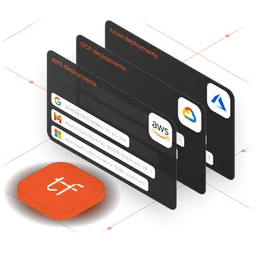
Tensorfuse provides a platform for deploying and managing large language model (LLM) pipelines on cloud infrastructure, allowing users to run serverless GPUs on AWS, Azure, or GCP. The solution enables businesses to scale generative AI models efficiently while keeping data secure within their private cloud, eliminating idle costs and reducing egress charges.
Little Place Labs develops proprietary edge-compute software, Orbitfy, to process multi-modal satellite data directly in orbit using AI and machine learning. This capability transforms raw data into precise insights in under seven minutes, enabling proactive decision-making for defense and commercial applications. The company delivers actionable, custom alerts from satellites, allowing users to cue expensive assets efficiently for surveillance and monitoring tasks.
Cedana provides compute orchestration software that automatically migrates GPU+CPU workloads across on-premise and multi-cloud environments to increase throughput by 2-10x. The platform seamlessly integrates with Kubernetes and SLURM to manage resource scheduling based on price, performance, and SLAs. It ensures high reliability through system-level checkpointing that resumes workloads transparently after hardware failures.
PropulsionAI provides a platform for AI developers to train custom large language models (LLMs) using open-source frameworks like Llama2 and Mistral, significantly reducing development time to as little as one-tenth of traditional methods. The platform ensures 100% accuracy and cost efficiency by optimizing GPU usage, enabling seamless integration of trained models into applications.
NetworkOcean builds and operates floating data‑center barges and submerged capsules that use direct seawater cooling to cut power usage by up to 40% and eliminate freshwater consumption. The modular platforms support high‑density GPU racks for AI and HPC workloads, offering rapid four‑month deployment and lower total cost of ownership compared to traditional land‑based data centers.

Exa Laboratories manufactures reconfigurable chips for AI that achieve up to 27.6 times the efficiency of traditional GPUs by dynamically adapting to various AI models through software configuration. This technology addresses the limitations of classical computing architectures, enhancing speed and energy efficiency for applications ranging from data centers to edge devices.
The startup provides an app development platform that enables businesses to quickly launch applications using pre-built APIs for machine learning and artificial intelligence. This solution allows companies to create and deploy AI-driven apps in minutes, significantly reducing development time and resources.
Thunder Compute develops software that virtualizes GPUs across a network, allowing users to connect any GPU to their cloud instance in real time without complex configuration. This technology reduces costs by enabling users to pay only for active GPU usage, eliminating expenses associated with idle resources.
Recurvia develops intelligent systems and tooling that enable self‑optimising AI models, focusing on continuous optimization rather than static training pipelines. Its flagship product, Paramorph, uses adaptive control and multi‑agent learning to dynamically adjust hyperparameters and training behavior at runtime, improving convergence speed, scalability, and compute efficiency for large‑scale neural networks. By accelerating iteration velocity and reducing GPU and memory bottlenecks, Recurvia helps AI teams deploy more performant models faster.
Cedana provides a centralized control plane that abstracts and orchestrates compute resources across cloud and on‑premise environments, letting DevOps teams provision, monitor, and scale workloads from a single dashboard. Its API‑first platform integrates with CI/CD pipelines and offers automated scaling, real‑time analytics, and role‑based access controls to streamline hybrid infrastructure management and improve operational efficiency.
Moonglow provides a no-code platform that enables machine learning researchers and data scientists to create browser agents for automating repetitive workflows, such as connecting local Jupyter notebooks to remote cloud compute. This solution streamlines data processing tasks, enhancing productivity and reducing manual effort in research environments.
Archil provides an infinitely scalable, shareable cloud file system that mounts directly onto existing S3 buckets, delivering up to 30× faster read/write performance for AI model training, analytics, and agentic workloads. Its usage‑based billing charges only for actively accessed data, enabling up to 90% cost savings compared with traditional block storage, and it integrates with common AI platforms via standard file system APIs.
Cua provides a cloud‑native platform that offers secure, on‑demand sandboxes for AI agents to interact with graphical user interfaces across macOS, Windows, Linux, and web environments. The service includes integrated vision‑language models, a benchmarking suite, and language‑agnostic SDKs, enabling developers to build, test, and scale UI automation agents via REST APIs and CI/CD pipelines. Usage is billed per sandbox minute and per VLM inference token.
Selligion is developing a hybrid cloud compute ecosystem utilizing a Computing As A Service model to provide scalable and flexible computing resources. This approach addresses the challenges of high infrastructure costs and limited access to computing power for businesses, enabling them to efficiently manage workloads without significant upfront investment.
Karbon Digital builds cloud‑native AI platforms that turn raw data into actionable intelligence and embed intelligent automation into enterprise workflows. Their services include AI‑driven document processing, predictive copilots, secure data pipelines, and automated security governance, all designed for scalable, multi‑cloud and edge deployments.
The startup provides cloud services, including infrastructure as a service and platform as a service, tailored for sectors such as healthcare, defense, energy, and banking. Their solutions enable organizations to enhance operational efficiency and scalability while managing complex cloud strategies effectively.
Provides a cloud-agnostic platform, UnifyAI, that streamlines the development and deployment of AI/ML use cases by integrating data pipelines, model training, and monitoring into a single workflow. Reduces time to production by 40% and total cost of ownership by 30%, enabling industries like insurance, banking, and retail to transition from experimentation to scalable, enterprise-grade AI solutions in weeks.
Pints.ai provides a secure, on-premise AI platform for financial institutions to leverage generative AI for research and analytics. Our solution enables advanced capabilities like private LLMs and predictive modeling while ensuring strict data privacy and regulatory compliance.
GSI Technology provides high-performance, low-power Associative Processing Units (APUs) for advanced AI and compute applications. Their patented APU technology enables efficient vector search, generative AI, and complex data processing. GSI also offers radiation-hardened memory solutions for aerospace and defense applications.
AI Planet provides an end-to-end orchestration engine for enterprises to build and deploy secure, private Generative AI applications. The platform enables rapid integration of reliable LLM apps within existing enterprise environments, offering significant infrastructure cost savings and faster time to market. It supports custom LLM development, integration with diverse data sources, and flexible deployment options across major cloud providers.
OpenFoundry provides a streamlined developer experience for building and deploying open source AI-powered products rapidly. Users can quickly discover optimal models, prototype, and fine-tune solutions with minimal effort. The platform facilitates shipping complete AI stacks to the cloud in minutes, significantly accelerating product delivery.
Immutable Labs operates a decentralized computing network that utilizes Green Proof of Work (GPOW) to secure and validate AI data models while ensuring compliance and transparency. The platform addresses the lack of explainability in AI by providing a public validator network that allows users to access and train on immutable, high-quality data.
Let'z AI provides a cloud‑based platform that lets small and medium businesses add machine‑learning capabilities to their workflows without needing data‑science expertise. Users can upload data, choose from pre‑built model templates, and deploy predictions via drag‑and‑drop dashboards or one‑click APIs, while the service handles preprocessing, training, scaling, and ongoing monitoring.
PnP.ai provides an AI-as-a-Service platform that enables small and medium enterprises to implement containerized AI solutions tailored to specific industry needs, including ecommerce, retail, healthcare, and finance. By simplifying AI integration, PnP.ai helps businesses enhance operational efficiency and improve customer experiences without the complexities of traditional AI development.
Satlyt builds a decentralized space computing platform that interconnects satellites into a unified edge computing network. This platform allows satellite operators to monetize their excess compute capacity through a dedicated marketplace. Developers can utilize APIs to build custom applications leveraging distributed processing directly on orbiting assets.
Lilypad offers a platform for AI model deployment, distribution, and monetization, connecting model creators with compute providers. Their platform combines a model marketplace, MLOps tools, and a distributed compute network to simplify scaling AI inference across various applications. This allows AI model creators to generate revenue and compute providers to monetize their resources.
Artificialbrain provides Planck, a cloud‑based Quantum‑AI platform that blends quantum computing (annealing and gate‑model) with deep learning to solve large‑scale optimization, simulation, and predictive analytics problems. Enterprises submit data via a drag‑and‑drop interface or API, and Planck runs hybrid quantum‑classical workflows to deliver faster, more accurate results for supply chain, finance, manufacturing, and R&D workloads.
Uniti provides an integrated InfraTech platform that combines modular edge data centers, battery storage, and vehicle‑to‑grid capabilities to deliver low‑latency computing, reduced capital and operating costs, and dynamic energy balancing for cities. By locating compute resources near demand and using electric vehicles as mobile storage, the solution enables faster, more resilient digital services and scalable AI workloads for municipal authorities, utilities, and mobility providers.
Provides a no-code AI platform powered by Deep Agent™ technology, enabling businesses to build, deploy, and scale custom AI agents without requiring technical expertise. It streamlines AI implementation by reducing development time to minutes, offering flexibility with open-source model integration, and ensuring predictable pricing with no hidden costs.
Heurist AI provides serverless access to a decentralized network of open-source AI models, utilizing an Elastic Chain built with a ZK Stack for efficient smart contract execution. This platform enables users to leverage AI inference and training without the operational burdens of managing GPU servers, while also allowing community members to contribute compute power and earn tokens.
Shadeform is an API platform that provides real-time pricing and availability for GPU workloads across multiple cloud providers, allowing users to launch and manage instances from a single console. This solution reduces costs and simplifies the deployment of GPU resources for training and inference tasks, addressing the complexity of multi-cloud management.
The startup offers a subscription-based machine learning platform that enables users to design, train, and maintain their AI models by simply uploading data. This technology allows businesses to leverage their data for actionable insights, enhancing profitability and operational efficiency.
The startup offers an AIOps platform that enables agentless data ingestion and intelligent pre-processing for IT operations. By automating data collection and onboarding, the platform enhances predictive analytics for network performance in data centers and hybrid environments, allowing users to efficiently aggregate and stream data.
Tallgeese AI provides a privacy-first Edge AI workstation for deploying generative AI software on-premise. This solution enables organizations to run LLM-powered applications locally, ensuring complete data control and security. The platform supports no-code deployment for customizing AI bots with internal documents and running multiple AI applications offline.
RaiderChip designs semiconductor hardware accelerators that enhance AI performance by addressing memory bandwidth limitations. Their solutions enable efficient AI inference for both edge and cloud applications, allowing users to run complex large language models locally with full privacy and without ongoing subscriptions.
Byne provides a platform for building production-ready backends for LLM-powered applications, enabling users to create scalable LLM agents that can be deployed on-premise or at the edge. The solution addresses the need for efficient, high-performance AI deployment in environments with extreme scaling and privacy requirements, while also offering custom edge model optimization and data acquisition services.
Phanofi provides a photonic interconnect platform that replaces power‑intensive electronic transceivers with optical links using coherent modulation and patented Fano Detector technology. The chiplet‑based solution delivers high bandwidth per laser while reducing power consumption, enabling AI datacenters and high‑performance computing facilities to scale compute capacity more sustainably and cost‑effectively.
The startup provides a platform for managing machine learning compute infrastructure across multi-cloud and hybrid cloud environments. This solution addresses the complexity of resource allocation and orchestration, enabling organizations to optimize their ML workloads and reduce operational costs.
ebb3 provides secure private platforms for AI and VDI digital workspaces, utilizing NVIDIA systems and Omnissa software to enhance performance and scalability for demanding workloads. The company addresses the challenges of inefficient computing environments by delivering tailored infrastructure that optimizes resource allocation and ensures robust security for sensitive data.
Provides a high-performance compute platform optimized for developer workflows, offering managed GitHub runners, remote Docker builders, and incremental build capabilities. By integrating seamlessly with tools like GitHub Actions and Docker, it reduces CI build and test times significantly while lowering costs through efficient caching and horizontal scaling.
nTieSet offers STADLE, a platform that optimizes the development, deployment, and updating of AI models by enabling secure training across data silos and reducing operational costs by up to 90%. The technology accelerates model updates by 10 times and enhances accuracy by 40%, making AI more accessible and efficient for enterprises in industries such as insurance, manufacturing, and healthcare.