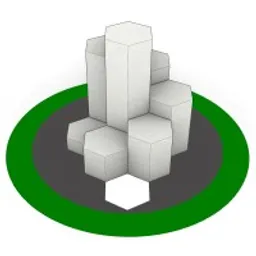
The Sliding Puzzle for Cities provides an urban planning instrument that uses strategically managed empty spaces as movable assets to enable incremental, continuous city development. This approach addresses challenges like housing affordability, urban sprawl, and infrastructure deficits while preserving social cohesion through phased relocation. The mechanism supports both densification and downscaling, with applications ranging from redeveloping informal settlements to opening space for major infrastructure projects.
Funding
Funding not disclosed
Founders
Product
Problem
Cities worldwide face interconnected challenges including climate change pressures, urban sprawl, rising housing costs, and deficient infrastructure. Traditional zoning approaches treat empty space as either a liability or a receptacle to be filled, limiting adaptability and preventing incremental development that could address these issues while maintaining community cohesion.
Solution
The Sliding Puzzle for Cities offers an original urban planning mechanism that treats empty spaces as dynamic, movable assets rather than static problems. By strategically shifting the location of empty spaces through calculated cycles, the instrument enables incremental and continuous infrastructural development while guaranteeing relocation of inhabitants within relative proximity. This approach allows cities to increase housing capacity in coveted central neighborhoods, adapt areas needing new access points, create new urban centralities in suburban complexes, and redevelop informal settlements without displacing residents. The mechanism is highly adaptable, supporting both scaling-up through verticalization and scaling-down, with applications ranging from building railway lines to mixed-use redevelopment projects.
Target Audience
Primary users are municipal governments, urban planning departments, and city development authorities seeking adaptable tools for housing density management, infrastructure development, and informal settlement redevelopment.
Features
- Dynamic empty space management system that shifts location and quantity according to projected development needs
- Incremental development cycles that enable sequential improvements rather than requiring large-scale master plans
- Support for both densification/verticalization and downscaling or simple renewal projects
- Relocation framework that keeps inhabitants within relative proximity to preserve urban social fabric
- Applicable to informal housing redevelopment with property rights guarantees and participatory inclusion
- Adaptable for opening space for key infrastructure projects such as railway lines or large-scale construction
- Mixed-use capacity building that increases municipal housing stock while maintaining empty space reserves