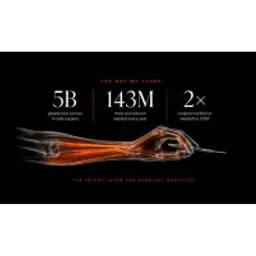
PlainHand is developing software, evidence systems, sensing, and future data instruments to help dexterous machines learn skilled physical intelligence from human expertise. The company’s research program tests whether each human demonstration can teach robotic systems more useful, transferable physical structure, focusing on force, contact, timing, correction, and recovery. PlainHand’s long-term platform layers public-data evidence, selective sensing, a sensorized glove, and robot-native data instruments into a compounding training infrastructure.
Funding
Funding not disclosed
Founders
Product
Problem
Physical skill acquisition for dexterous machines is constrained by insufficient training data. Ordinary recordings of human demonstrations miss critical information like force, contact, timing, correction, and recovery, which are essential for reliable fine motor control and contact awareness. As a result, robots struggle to perform reliably when conditions change, limiting their usefulness in real-world physical tasks.
Solution
PlainHand is building the training layer through which dexterous machines learn skilled physical intelligence from human expertise. The company develops software, evidence systems, sensing, and future data instruments designed to capture synchronized contact, force, pose, and motion data. Its research program uses matched baselines and reproducible measurement to test each component against rigorous evidence standards, with the goal of increasing the capability gained per demonstration. The long-term platform compounds software evidence, selective sensing, proprietary physical data, and correction loops into reusable infrastructure, without assuming every layer will pass its gate.
Target Audience
Primary customers are robotics and AI research organizations, dexterous manipulation developers, and physical AI training infrastructure providers seeking higher-fidelity human demonstration data and reproducible learning methods.
Features
- Research architecture with eight bounded questions, including adaptive sensor attention, movement vocabulary and packets, few-attempt learning, and recovery under irreversible contact
- Sensorized human-data glove that captures synchronized contact, force, pose, and motion data from physical interactions
- Evidence infrastructure with matched baselines, reproducible measurement, portability tests, and explicit claim boundaries to validate performance
- Training infrastructure that decides what machines should learn from and how physical information should influence learning
- Future robot data instruments designed to execute, measure, and generate new interaction data
- Correction loop that turns failures and human corrections into new training records