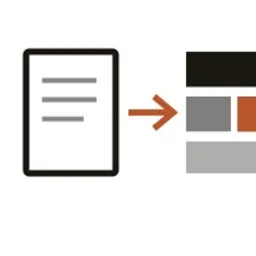
Infratex provides a document context layer for enterprise agentic AI, converting unstructured PDFs, complex tables, and handwritten scans into structured JSON and Markdown that LLMs can reason over. The platform uses visual page understanding and layout region detection to produce semantic chunks, retrieval indexes, and cited answers. Infratex ranks first on the PulseBench-Tab benchmark for table extraction, achieving a 0.9636 mean T-LAG score across 1,820 multilingual samples.
- Artificial Intelligence
- AI Agents
- Developer Tools
- Enterprise Software
- Software Only
Funding
Founders
Product
Problem
Enterprises rely on documents rather than databases, with 80% of enterprise data being unstructured and residing in PDFs, scans, and spreadsheets that LLMs cannot natively parse. Teams spend over six months stitching together OCR endpoints, chunking pipelines, and post-processors that break when formats evolve, and only 15% of in-house document ingestion tools actually reach production.
Solution
Infratex provides a document context pipeline that transforms raw PDFs into structured, AI-ready data through visual page understanding and layout region detection. The engine reads pages visually, identifies layout regions such as headings, tables, formulas, and charts, and emits clean Markdown and JSON with bounding boxes, page numbers, and schema bindings. The platform then generates ordered, cited semantic chunks and a hybrid-search vector index, enabling AI agents to retrieve context and produce answers tied to source regions. This end-to-end approach eliminates the need for fragmented OCR and chunking toolchains, giving enterprises a reliable context layer their agents can trust.
Target Audience
Primary customers are enterprise AI teams and platform engineers building agentic systems that need to process large volumes of unstructured documents, particularly those handling financial reports, technical manuals, and multilingual content.
Features
- Visual page understanding engine that reads documents as images rather than text streams, enabling accurate parsing of complex layouts
- Layout region detection that makes headings, tables, formulas, and charts addressable with bounding box coordinates and schema bindings
- Structured output generation producing both Markdown and JSON with page-level metadata for downstream AI consumption
- Semantic chunking pipeline that creates ordered, cited, retrievable context units for retrieval-augmented generation
- Hybrid search vector index combining semantic and metadata filtering for precise document retrieval
- Cited answer generation that ties AI responses directly to source regions, ensuring verifiable outputs
- Top-ranked performance on PulseBench-Tab with a 0.9636 mean T-LAG score across 1,820 multilingual table samples, winning 9 out of 10 languages